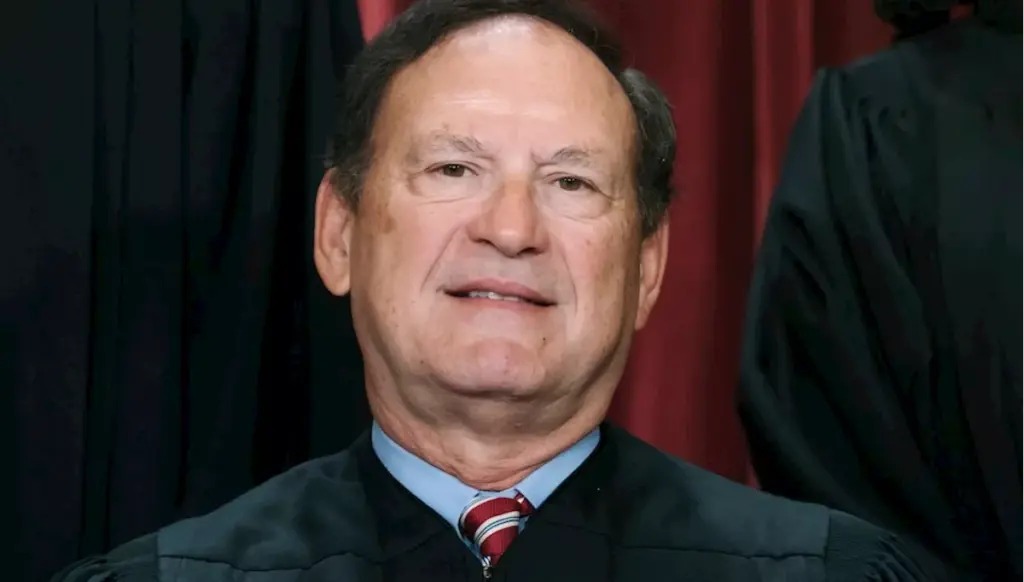
The United States Supreme Court recently engaged in a significant debate regarding the potential removal of Lisa Cook, a Federal Reserve governor appointed by former President Donald Trump. The discussions focused on what constitutes “for cause” grounds for dismissal, with Justice Samuel Alito posing provocative hypotheticals to assess the limits of presidential authority over such appointments.
Arguments Surrounding Cook’s Dismissal
During oral arguments, Justice Alito inquired whether support for historical figures such as Adolf Hitler or organizations like the Ku Klux Klan would be sufficient reason for a president to remove a Federal Reserve governor. This line of questioning aimed to clarify the legal thresholds necessary for a “for cause” termination, particularly as Cook continues to challenge her firing in the courts.
Cook’s legal representative, Paul Clement, defended her position by asserting that even egregious behavior, such as a history of sexual misconduct, would not meet the threshold for removal. “That would certainly be a basis for impeachment,” Clement stated, emphasizing the distinction between impeachment and removal under the “for cause” standard.
Alito’s hypothetical scenarios extended to more extreme examples, provoking discussion about the limits of acceptable behavior for public officials. “How about if, after the person assumes office, videos are disclosed in which the office-holder is expressing deep admiration for Hitler or for the Klan?” he asked. Clement maintained his stance, suggesting that such instances would lead to immediate impeachment rather than a justified firing.
Context of the Legal Battle
The controversy began when Trump dismissed Cook in August 2023, citing allegations from Bill Pulte, the Director of the Federal Housing Finance Agency. Pulte claimed that Cook had misrepresented her primary residence status in 2021 to secure favorable loan terms, potentially amounting to mortgage fraud. Following her dismissal, a district court ruled in September that Cook could remain in her position while she litigates the matter, a decision later upheld by an appeals court. Consequently, the case has reached the Supreme Court, reflecting ongoing tensions between the executive branch and independent regulatory agencies.
This case not only underscores the complexities of presidential removal powers but also highlights the unique structure of the Federal Reserve, which both parties acknowledged as distinct in its operational independence. As the justices weighed the arguments, concerns about the implications of broad presidential authority over independent agency heads came to the forefront.
The Supreme Court’s deliberations on this matter could have lasting impacts on how federal agencies operate and the extent of presidential power in relation to these appointments. As the case progresses, the legal community and the public alike will be closely monitoring the court’s eventual decision.