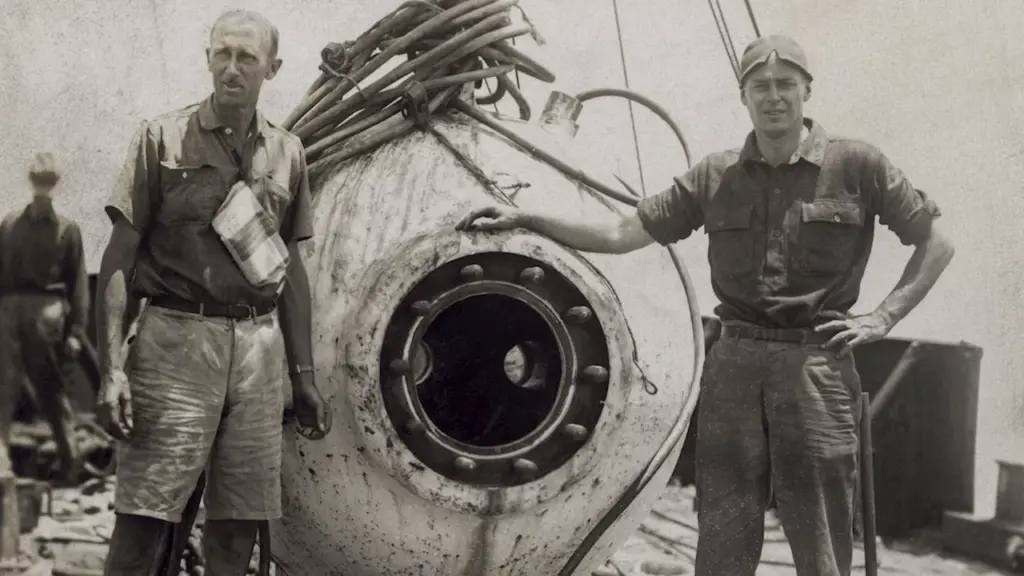
In June 1930, explorers William Beebe and Otis Barton achieved a remarkable feat in ocean exploration by descending to a depth of 1,426 feet in a revolutionary device known as the bathysphere. This historic dive marked a significant advancement in our understanding of the deep-sea environment, revealing a world teeming with life that remained largely unknown.
The bathysphere, a robust steel sphere weighing two tons, was designed to withstand the immense pressure of the ocean’s depths. Prior to this momentous expedition, Beebe had spent years studying marine life off the coast of Bermuda, driven by an insatiable curiosity and a desire to explore the deep-sea ecosystem. He collaborated closely with Barton, who contributed his expertise in engineering and safety, ensuring that the bathysphere could endure the hazardous conditions of the deep ocean.
As they prepared for their descent, Beebe and Barton conducted extensive tests, meticulously checking their equipment and ensuring that all systems were functional. The bathysphere was equipped with oxygen tanks, a telephone for communication, and a searchlight, making it a cutting-edge tool for underwater exploration. The anticipation on the day of the dive, June 6, 1930, was palpable as they set out from the shore, navigating through the picturesque waters surrounding Bermuda.
Once the bathysphere was lowered into the sea, the explorers experienced a gradual transition from the surface to the deep blue depths. As they descended, the light from the surface faded, replaced by a mesmerizing twilight that enveloped them in a cool, green hue. At depths of 100 feet and beyond, the water darkened further, presenting an eerie yet beautiful landscape that few had ever witnessed.
During the dive, Beebe recorded his observations, noting the captivating colors and forms of deep-sea creatures. He described seeing vibrant bioluminescent organisms and the extraordinary adaptations of fish that thrived in the absence of sunlight. The experience was akin to exploring an alien world, with creatures that seemed almost otherworldly.
At around 800 feet, the explorers encountered a breathtaking spectacle: schools of silver hatchetfish glimmering in the searchlight, showcasing the remarkable diversity of life that inhabits the ocean’s depths. The bathysphere allowed Beebe and Barton to observe behaviors and interactions they had only theorized about before.
Beebe’s excitement was palpable as he communicated with Barton and Miss Gloria Hollister, who monitored their descent from the surface. Each depth milestone brought new revelations, as they recorded the changes in light and color with increasing fascination. The pair remained calm and focused, even as they encountered minor leaks and other challenges.
After spending several hours submerged, the team successfully resurfaced, bringing back invaluable data and firsthand accounts of life in the deep sea. The success of their mission not only advanced oceanographic science but also ignited public interest in marine exploration. The bathysphere’s groundbreaking design and functionality paved the way for future underwater research, inspiring generations of scientists and explorers.
This landmark expedition demonstrated that the depths of the ocean held a wealth of knowledge just waiting to be discovered. The efforts of Beebe and Barton opened the door to a new understanding of marine ecosystems, highlighting the necessity of further exploration into areas previously deemed unreachable. Their legacy continues to influence the field of oceanography, reminding us of the wonders that lie beneath the waves.