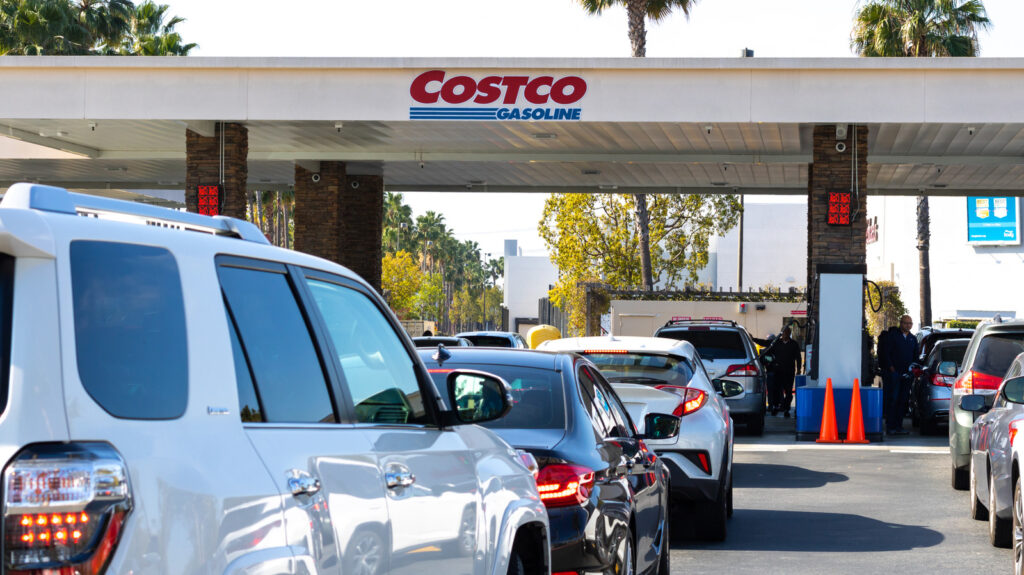
Costco is revolutionizing the way customers refuel by implementing one-way traffic at its gas stations. This innovative approach streamlines the fueling process, allowing vehicles to fill their tanks more efficiently and reducing overall wait times. The design not only enhances convenience for Costco members but also addresses common frustrations faced by drivers at traditional gas stations.
Efficient Design and Customer Convenience
At Costco gas stations, the one-way traffic flow ensures that all vehicles can access fuel pumps without the hassle of maneuvering into specific lanes. This setup is complemented by extra-long hoses that can reach either side of a vehicle, making it unnecessary for drivers to align their cars in a particular direction. By simplifying the refueling process, Costco enhances the overall experience for customers, allowing them to complete errands quickly and efficiently.
In addition to the streamlined gas station design, Costco has extended its operating hours as of February 2025, further contributing to customer convenience. Members can also benefit from complimentary nitrogen tire refills and other tire maintenance services, positioning Costco as a one-stop shop for various automotive needs.
The Challenges of Fuel Tank Placement
The one-way traffic system at Costco addresses a common issue faced by many drivers: the inconsistency of fuel tank placement among vehicles. According to data from IDriveYourCar, approximately 78% of cars sold in 2020 had fuel tanks located on the left side, while 22% had them on the right side. This disparity can lead to confusion and inconvenience, particularly for those who are not Costco members.
Interestingly, some manufacturers, like Mercedes-Benz, design their vehicles with fuel tanks on the right side due to regional driving norms. Bharat Balasubramanian, former head of research at Mercedes-Benz Group AG, explained that in Germany, where traffic drives on the right, having the fuel tank on the right side allows for safer refueling away from passing vehicles. This consideration is crucial for manufacturers aiming to enhance driver safety and convenience.
While many brands, such as Honda, Hyundai, and Dodge, have consistently placed their fuel tanks on the left side, others like Land Rover, Porsche, and Volvo have opted for the right side. This variation underscores the complexity of automotive design and the factors that influence fuel tank placement.
As Costco continues to prioritize customer satisfaction through innovative solutions like one-way traffic at gas stations, it exemplifies a commitment to improving the fueling experience for all drivers. By addressing the challenges posed by fuel tank placement and simplifying the refueling process, Costco is making a significant impact on how motorists manage their time and errands.