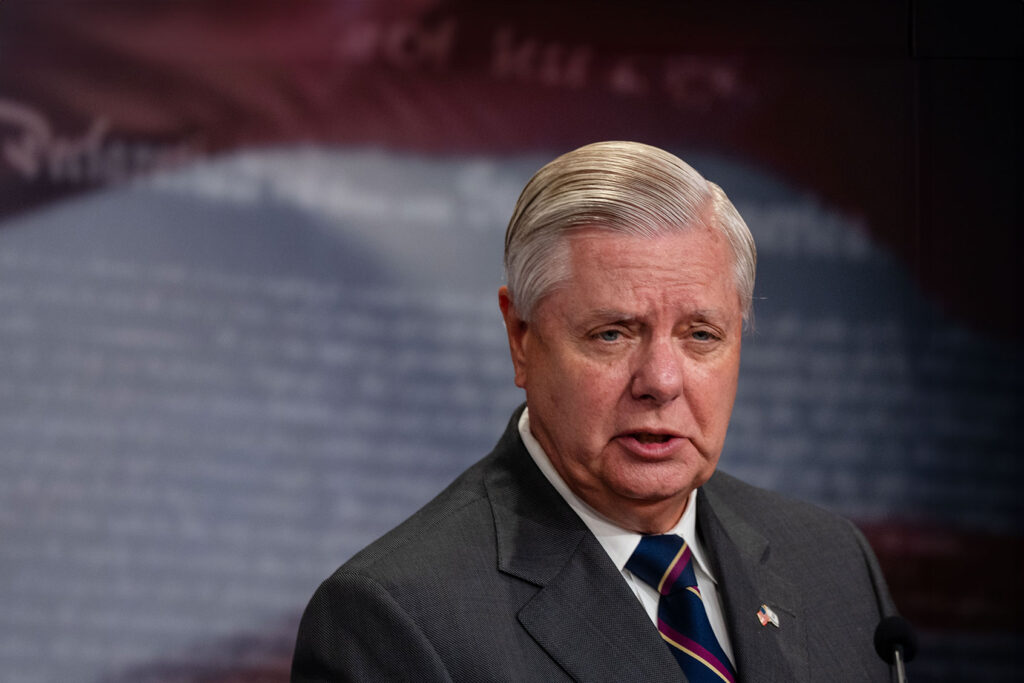
Senator Lindsey Graham has issued a stark warning to the leadership of Cuba, suggesting they consider relocating amid escalating tensions in the Caribbean. This statement follows recent U.S. military actions in Venezuela, where tensions have reached a boiling point. Graham’s comments were made via social media, where he advised the Cuban government to seek advice from Venezuelan President Nicolás Maduro on how to navigate their precarious situation.
Graham’s remarks were prompted by a post from former President Donald Trump, who emphasized that Cuba could soon face dire consequences if it does not negotiate with the United States. Trump stated, “Cuba lived, for many years, on large amounts of oil and money from Venezuela…BUT NOT ANYMORE!” He declared that no oil or financial assistance would flow to Cuba, urging the Cuban authorities to act quickly to avert disaster.
Potential Military Action and Political Stance
The Trump administration has not shied away from making threats against neighboring nations following its recent coup in Venezuela. Countries such as Cuba, Mexico, Colombia, and even Greenland have been mentioned as potential future targets for U.S. military intervention. During an appearance on “Meet the Press,” Secretary of State Marco Rubio, a long-time critic of the Cuban regime, did not dismiss the possibility of military action, stating, “The Cuban government is a huge problem. I think they’re in a lot of trouble, yes.”
Rubio’s comments reflect a broader sentiment among U.S. lawmakers who have expressed frustration with the Cuban government’s handling of its internal affairs. While he refrained from detailing specific future actions, the implication was clear: the U.S. is prepared to take a firmer stance if conditions do not improve.
Context of U.S.-Cuba Relations
The history of U.S.-Cuba relations is fraught with tension, particularly since the Cuban Revolution of 1959. For decades, the U.S. has sought to undermine the Cuban government, which it views as a significant threat in the region. The recent upheaval in Venezuela has intensified concerns among U.S. officials regarding the stability of the Caribbean and the influence of leftist governments.
Graham’s comments, along with Trump’s strong rhetoric, signal a potential shift in U.S. policy towards Cuba. As both politicians leverage their platforms to suggest drastic measures, the situation remains fluid. Many observers are watching closely to see how these threats may translate into concrete actions in the coming weeks.
The rhetoric from U.S. officials suggests a willingness to escalate tensions further, potentially leading to increased conflict in an already volatile region. As the Caribbean braces for possible fallout, the international community is left to ponder the implications of such warnings and the future of U.S.-Cuba relations.