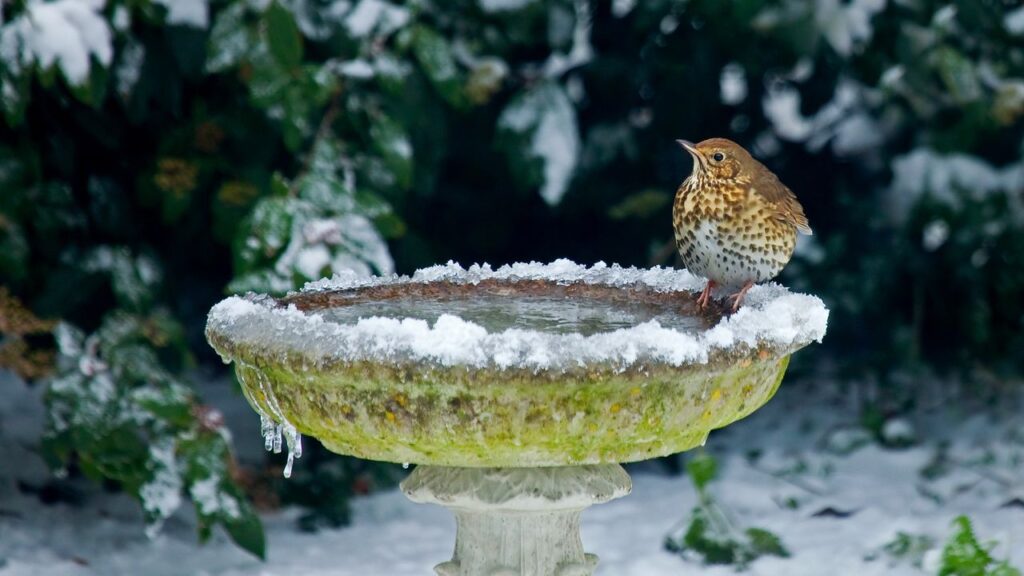
Song Thrush on bird bath in snow; Shutterstock ID 67501129; purchase_order: -; job: -; client: -; other:
Bird baths offer a vital resource for local bird populations, providing a safe and reliable source of water. As winter approaches, it becomes crucial to ensure these outdoor features remain functional, especially as many birds stay in the area despite the cold temperatures. A simple and cost-effective solution involves using items readily available at home.
As temperatures drop, people often assume that bird baths will see less activity. While it is true that many birds migrate south, numerous species remain in their habitats during winter, making access to fresh water essential. Additionally, freezing temperatures can lead to damage of the bird bath itself if ice forms within the basin.
A common and inexpensive method to prevent ice formation is to use a table tennis ball. These balls are designed to specific standards, making them effective for floating on the water. When placed in a bird bath, the ball moves with the slightest breeze, disrupting the formation of ice. This natural movement helps break up any small ice crystals, preventing them from solidifying into a thicker layer.
Alternative Solutions for Winter Bird Baths
While a table tennis ball is an effective icebreaker, there are other strategies to ensure your bird bath remains functional throughout the winter months.
One approach is to enhance the basin’s ability to absorb sunlight. Adding black river rocks to the bottom of the bird bath can increase the overall temperature of the water during the day. This method can be particularly effective in areas that experience severe cold.
Positioning the bird bath in a sheltered location can also help maintain warmth. Placing the bath in a spot that receives ample sunlight but is shielded from strong winds can significantly impact the water temperature. If necessary, creating a windbreak can further enhance this effect.
Insulation around the basin is another option. Wrapping the bird bath with materials such as straw or burlap provides a rustic appearance while helping to retain heat. This insulation can be particularly beneficial during the coldest nights.
Maintaining proper water levels is equally important. A deeper water basin takes longer to freeze, so topping it up with warm water daily can help maintain a higher overall temperature without shocking the materials.
Lastly, consider using frost-resistant materials for the bird bath itself. While ceramic and stone baths are visually appealing, switching to a resin model specifically labeled as frost-resistant can reduce the risk of cracking due to freezing.
Precautions to Avoid Damage
While it may be tempting to take drastic measures to prevent ice from forming, certain actions can cause more harm than good. For instance, pouring boiling water into a frozen bird bath can create thermal shock, potentially causing it to crack or shatter.
Adding salt or chemicals to the water to lower its freezing point is also inadvisable. This practice not only compromises the water quality but could make it toxic for birds, defeating the purpose of providing hydration.
Furthermore, placing a space heater near the bird bath poses significant safety risks. Such devices are typically not designed for outdoor use and could lead to potential fire hazards or electrical issues.
By implementing these straightforward strategies, bird bath owners can ensure their outdoor spaces remain inviting and functional for local wildlife throughout the winter months. Simple methods like using a table tennis ball can make a significant difference, supporting the health and hydration of birds even in the coldest weather.