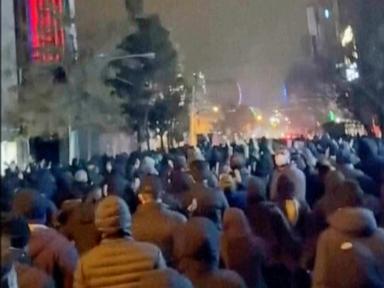
Nationwide protests in Iran challenging the country’s theocratic regime have escalated, resulting in at least 116 deaths according to activists. The demonstrations, which began on December 28, 2023, have now entered their third week, with violence reported in multiple cities including Tehran and Mashhad.
The unrest has been exacerbated by a significant internet blackout, making it increasingly challenging to monitor developments from abroad. The U.S.-based Human Rights Activists News Agency reported that over 2,600 individuals have been detained amid the protests. Concerns are growing that this information blackout could embolden hard-liners within Iran’s security forces to intensify their crackdown on demonstrators.
International Reactions and Military Options
In a show of support for the protesters, U.S. President Donald Trump stated on social media that “Iran is looking at FREEDOM, perhaps like never before. The USA stands ready to help!!!” Reports from The New York Times and The Wall Street Journal cited anonymous U.S. officials indicating that Trump has been presented with military options for a strike against Iran, although no final decision has been made. The U.S. State Department issued a warning, underscoring the seriousness of Trump’s statements.
Footage reportedly emerging from Iran, likely transmitted via Starlink satellite technology, depicts large gatherings of demonstrators in neighborhoods such as Punak in northern Tehran. Videos show protesters waving their mobile phones and banging metal objects, accompanied by fireworks. In Mashhad, approximately 725 kilometers northeast of Tehran, confrontations between protesters and security forces were captured, with streets obstructed by flaming debris.
Protests have also been reported in Kerman, located 800 kilometers southeast of Tehran. These demonstrations carry significant weight given Mashhad’s status as home to the Imam Reza shrine, the holiest site in Shiite Islam.
Government Response and Statements
Iranian state television has begun broadcasting from various cities, attempting to depict calm while avoiding coverage of Tehran and Mashhad. In a stark warning, Iran’s attorney general, Mohammad Movahedi Azad, declared that those participating in protests would be labeled as “enemies of God,” a charge that carries the death penalty. His statement indicated that even individuals who support demonstrators could face severe consequences.
Despite the government’s efforts to suppress information, prominent figures such as Iran’s exiled Crown Prince Reza Pahlavi have called for continued protests, urging supporters to reclaim public spaces using the old lion-and-sun flag. Pahlavi’s connection to Israel has sparked controversy, but demonstrators have nonetheless shown support for the monarchy amidst their calls for change.
The protests stem from widespread dissatisfaction over the Iranian rial’s collapse, which has plummeted to over 1.4 million rials per U.S. dollar due to international sanctions related to Iran’s nuclear program. As the situation develops, the protests have transformed into more than just economic grievances, now directly challenging the authority of Iran’s theocracy.