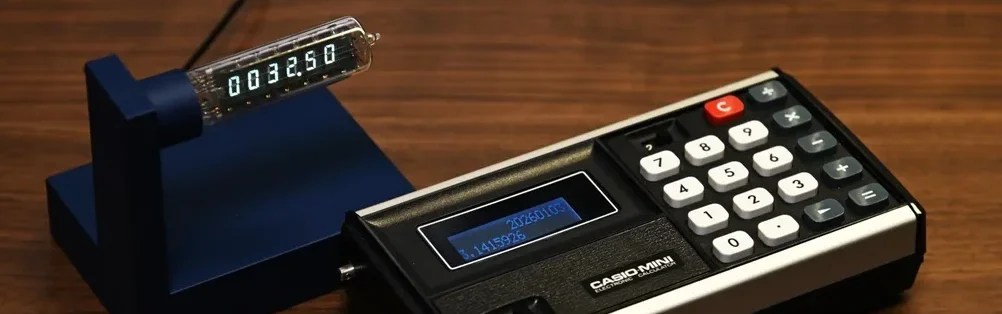
A creative engineering project has led to the transformation of a damaged Casio Mini CM-602 calculator into a modern device featuring Reverse Polish Notation (RPN) functionality. The project was initiated by a maker known as shiura, who repurposed the calculator while also salvaging its Variable Frequency Drive (VFD) display to create a stylish WiFi-enabled clock.
In an innovative approach, shiura faced the challenge of a malfunctioning calculator that had “let out the magic smoke.” Rather than discarding the device, they opted to rebuild it. The result is a dual-function project that showcases both technical skill and creativity. The process involved reverse engineering the VFD’s pins, which can be complex for those unfamiliar with electronics.
shiura detailed their technique in a comprehensive write-up, guiding others through the steps necessary for pin mapping. This involves powering up the VFD and systematically cutting power to each pin to identify the anodes and grid electrodes. The cathodes were identified by inspecting the printed circuit board (PCB), a method familiar to those with experience in electronics repairs.
Creating the VFD Clock
Once the pin mapping was complete, shiura wired the VFD to an ESP32 microcontroller using a transistor array to manage voltage levels. This setup enabled the creation of a functional clock, with all the necessary code and design files made available on GitHub. The project includes an editable .blend file, allowing makers to customize the design for their own use.
The calculator aspect of the project is equally impressive. The original Casio CPU was compatible with modern microcontrollers, specifically the RP2040 zero, which fits into the original CPU footprint. This allowed shiura to scan the keypad using the general-purpose input/output (GPIO) pins of the microcontroller. Instead of using the original display, an I2C display was connected to enhance usability, providing two lines instead of one.
Accessible Resources for Makers
Although the clock’s VFD display may have failed or been removed, the decision to repurpose the calculator shows a commitment to sustainability and innovation. The code for the calculator is also accessible on GitHub, and while the documentation is primarily in Japanese, machine translations make it manageable for international users.
Longtime followers of shiura‘s work may recognize their dedication to crafting clocks and restoring vintage pocket computers. This latest project exemplifies their ability to blend different technologies into one cohesive creation, reinforcing their reputation in the maker community.
By sharing both the clock and calculator designs, shiura has provided valuable resources for those interested in electronics and DIY projects. This dual transformation not only demonstrates technical prowess but also promotes the idea of reusing and repurposing electronic devices, aligning with the growing trend of sustainable technology practices.