Bac Ninh, Vietnam, has experienced a remarkable transformation, evolving from a region known for its rice fields and traditional folk songs into a thriving manufacturing hub. This shift is largely attributed to increased foreign investment, particularly following tariff hikes imposed by former U.S. President Donald Trump, which prompted companies to relocate from China. As factories continue to move to Bac Ninh, the region now faces critical questions about its future sustainability and growth.
Historically, Bac Ninh has been a center for artisans, but its industrial boom began around 2008 with the establishment of a Samsung phone factory. This factory became a cornerstone for Vietnam’s manufacturing landscape, transforming the country into Samsung’s largest offshore production base. Recent years have seen an influx of Chinese companies diversifying their operations to evade U.S. tariffs, with Bac Ninh acting as a key location due to its accessible labor force and favorable local government policies.
Despite these advantages, Bac Ninh’s rapid ascent is revealing underlying challenges. Rising labor costs and a shortage of workers are becoming significant hurdles. For instance, labor costs have increased by approximately 10%–15% since 2024, prompting companies to reconsider their operational strategies. Peng, an employee at a telecom equipment company that relocated from China’s Shenzhen, noted, “It is becoming difficult to recruit workers,” highlighting the competitive environment for labor.
As Vietnam seeks to enhance its position in the global manufacturing landscape, it is striving to move into higher-value production sectors while expanding its export markets. This ambition is reflected in Bac Ninh’s ongoing development projects, such as the recent groundbreaking on an industrial zone dedicated to high-tech manufacturing, which includes electronics, pharmaceuticals, and clean energy. These initiatives are part of a broader national strategy that aims to launch 234 major projects valued at over $129 billion ahead of the National Party Congress scheduled for January.
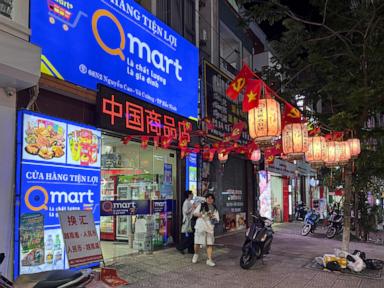
In Bac Ninh’s vibrant downtown, signs of this economic evolution are evident. Stores are adopting names like Tmall, after Alibaba’s flagship online marketplace, and various services now cater specifically to Chinese investors. Language schools are emerging to facilitate communication between local residents and the growing number of Chinese nationals.
Despite these advancements, challenges remain. The competition for labor is intensifying, leading to increased costs for companies adopting the “China plus one” strategy. Businesses are finding it necessary to offer higher wages and additional incentives to attract employees. For example, some firms are providing bonuses and transportation allowances to employees commuting from other cities.
Vietnam’s trade relationship with the U.S. further complicates the landscape. In 2024, Vietnam recorded a trade surplus of $123.5 billion with the U.S., making it the third-largest exporter to the country behind China and Mexico. This relationship has prompted discussions around tariffs, with Trump previously threatening a 46% import tax on Vietnamese goods before settling on 20%. Both nations are currently negotiating terms to maintain tariff levels, with Vietnam offering preferential access for U.S. products.
Despite the uncertainties surrounding tariffs, many companies are still relocating to Vietnam, attracted by the potential for growth. Cumulative foreign investment in the country reached $28.5 billion as of September, representing a 15% increase from the previous year. However, scrutiny regarding Vietnam’s role in tariff-dodging schemes has led some manufacturers to diversify their operations further, with one customer of SEKO Logistics shifting furniture production to India to mitigate risks.
As Bac Ninh continues to expand, it faces stiff competition from neighboring countries such as Indonesia and the Philippines, which are positioning themselves as viable alternatives for new manufacturing projects. In the Philippines, for instance, a new law allows foreign investors to lease land for up to 99 years, aiming to attract long-term investments.
Vietnam’s government has set ambitious targets for economic development, aspiring to become one of Asia’s next “tiger economies” by 2045. The nation is pushing to transition from low-cost assembly to higher-value manufacturing, focusing on sectors like electronics and clean energy. To support this goal, incentives such as tax breaks on imported machinery and reduced rental costs for factory space are being offered to encourage modernization.
As Bac Ninh navigates the complexities of its evolving manufacturing landscape, the stakes are high. Prime Minister Pham Minh Chinh recently emphasized the need for Vietnam to “reach far into the ocean, delve deep underground and soar high into space,” framing the ambitious vision for the country’s growth. The coming years will reveal whether Bac Ninh can sustain its growth trajectory and maintain its competitive edge amid rising costs and intense regional competition.