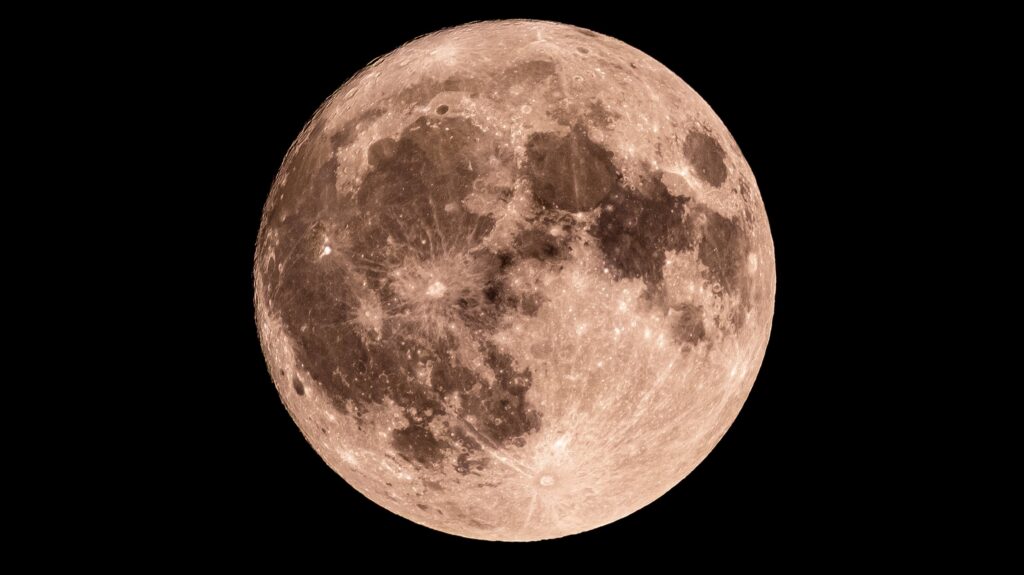
As of January 4, 2024, the Moon is in the Waning Gibbous phase, with approximately 98.6% of its surface illuminated. Following the recent Full Moon, the Moon will gradually decrease in brightness until it reaches the New Moon phase. This transition signifies the beginning of the waning cycle, during which the visible portion of the Moon shrinks each night.
According to The Sky Live, the current lunar phase will present a captivating sight for stargazers. The next Full Moon is anticipated on February 1, offering another opportunity for observers to witness the Moon fully illuminated.
Understanding Moon Phases
The phases of the Moon are a result of its orbit around the Earth, which takes approximately 29.5 days to complete a full cycle, known as the lunar cycle. During this period, the Moon transitions through eight distinct phases, each characterized by varying amounts of sunlight illuminating its surface.
The lunar cycle begins with the New Moon, when the Moon is positioned between the Earth and the Sun, rendering it invisible to observers on the ground. As the cycle progresses, the Moon moves into the Waxing Crescent phase, where a small sliver of light becomes visible on its right side in the Northern Hemisphere.
The subsequent phases include the First Quarter, where half of the Moon appears lit, followed by the Waxing Gibbous, during which more than half is illuminated but it is not yet full. The cycle peaks at the Full Moon, when the entire face of the Moon is brightly visible.
After reaching fullness, the Moon enters the Waning Gibbous phase, as it begins to lose light on the right side. This is followed by the Third Quarter, or Last Quarter, where the left side is lit, and finally the Waning Crescent, which presents a thin sliver of light before returning to the invisible New Moon phase.
Understanding these phases enhances appreciation for the celestial mechanics at play and provides a framework for observing the Moon throughout its cycle.