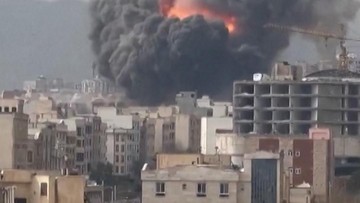
In the early hours of Saturday, Caracas experienced significant unrest as at least seven explosions were reported alongside the sound of low-flying aircraft. The Venezuelan government quickly accused the United States of launching attacks on civilian and military installations across multiple states.
The Pentagon has deferred requests for comment to the White House, which has not yet responded. In response to the unrest, the Federal Aviation Authority has banned U.S. commercial flights in Venezuelan airspace, citing ongoing military activity. Smoke was observed rising from a military base hangar in Caracas, and power outages were reported at another military installation.
Local Reactions and Government Response
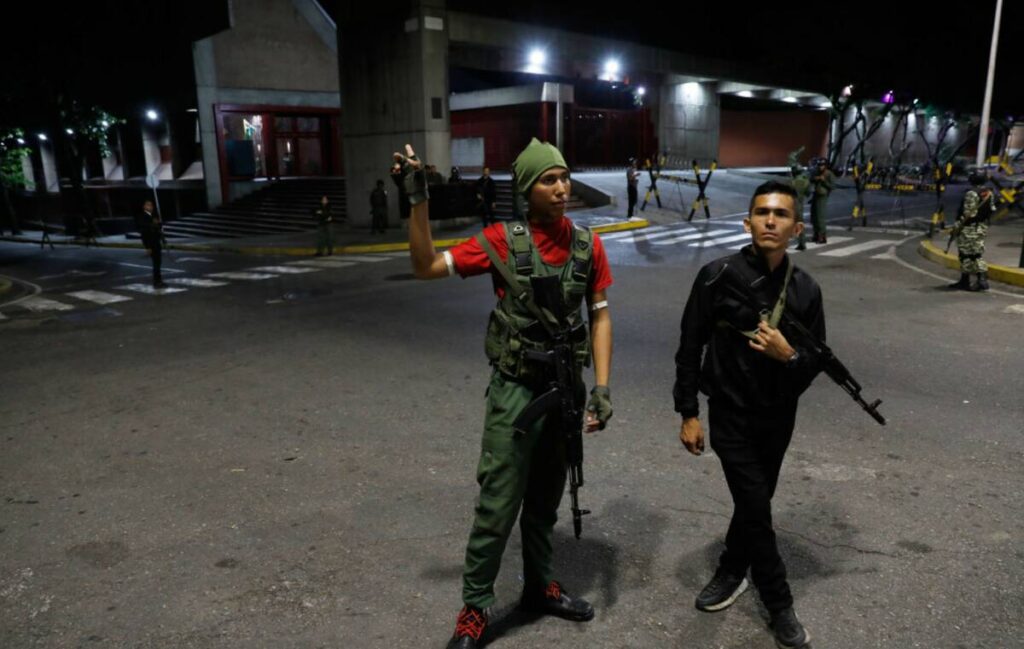
Residents across various neighborhoods rushed into the streets, shaken by the explosions. “The whole ground shook. This is horrible. We heard explosions and planes,” said Carmen Hidalgo, a 21-year-old office worker. She recounted feeling as if the air was hitting her as she hurried home from a birthday celebration with her family.
In a statement, the Venezuelan government urged supporters to mobilize in response to what it described as an “imperialist attack.” “People to the streets!” the statement declared, calling on all social and political forces to activate mobilization plans. President Nicolás Maduro ordered the implementation of national defense plans and declared a state of external disturbance.
Escalating Military Actions and Diplomatic Tensions
This incident unfolds against a backdrop of escalating military actions. In recent days, the U.S. military has targeted alleged drug-smuggling vessels, with the number of known strikes reaching 35 as of Friday. The U.S. administration has reported at least 115 fatalities linked to these operations, which have intensified following a major buildup of American forces in the region.
On Friday, Venezuela indicated its willingness to negotiate with the U.S. regarding drug trafficking, a potential shift in diplomatic stance. Previously, Maduro claimed that the U.S. aims to force a change in Venezuela’s government and access the country’s vast oil reserves through sustained military pressure.
Last week, a drone strike attributed to the CIA targeted a docking area believed to be used by Venezuelan drug cartels. This marked the first known direct military operation on Venezuelan soil since the U.S. began its campaign against boats in September.
President Donald Trump has framed these military actions as necessary to combat drug trafficking into the U.S., positing an “armed conflict” with drug cartels. The U.S. has also seized sanctioned oil tankers off the Venezuelan coast, further tightening economic pressure on the country.
The situation in Venezuela remains fluid, with the government and military on high alert following the recent explosions. As both nations navigate this escalating crisis, the potential for further confrontation looms large.