Research from the **Wuhan Botanical Garden** of the **Chinese Academy of Sciences** and **Ghent University** reveals significant insights into the evolutionary history of flowering plants, known as angiosperms. Published on **January 2, 2026**, in **Science Advances**, the study employs dosage-sensitive genes to argue against the existence of two ancient whole-genome duplications (WGDs) that have been widely accepted in scientific discourse.
Angiosperms form the most diverse group of seed plants, and understanding their origins has been a longstanding challenge in plant evolutionary biology. Whole-genome duplication is recognized as a crucial factor in the evolution of seed plants and angiosperms, but detecting these ancient events has proven difficult due to subsequent genetic changes that obscure clear genomic signals.
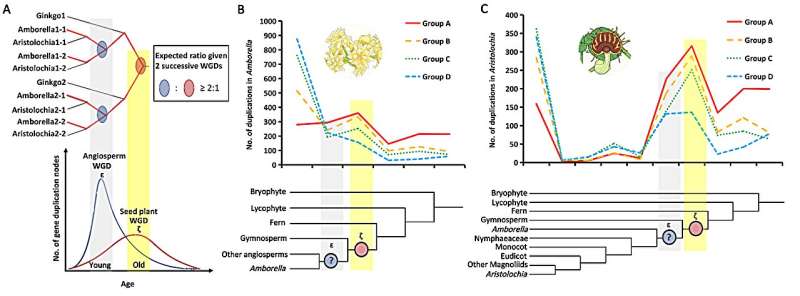
In 2011, a study proposed that two independent WGDs occurred in the history of angiosperms: the **ζ event** in seed plants and the **ε event** in angiosperms. Subsequent research in 2017 questioned these findings, suggesting that the evidence for these duplications might be more a result of methodological flaws rather than genuine evolutionary phenomena. This ongoing debate highlighted the need for further investigation into ancient WGD events.
To clarify the history of WGDs, the researchers introduced a novel approach by focusing on dosage-sensitive genes, which play a crucial role in maintaining cellular balance. These genes are more likely to be retained after WGDs due to their essential functions within protein complexes, signaling pathways, and regulatory networks. The researchers analyzed orthologous gene groups (OGs) from various angiosperms to quantify their dosage sensitivity and classify them into four categories based on their retention post-WGD.
The study revealed that highly dosage-sensitive OGs exhibit stronger purifying selection and broader tissue expression profiles. These markers proved effective in validating the presence of ancient duplications. Utilizing a combination of gene tree–species tree reconciliation and statistical modeling, the researchers examined competing WGD scenarios, focusing on two early-diverging angiosperms: **Amborella trichopoda** and **Aristolochia fimbriata**.
The results indicated a single significant duplication peak correlating to the ζ event, while evidence for the ε event was notably weak. The duplication node ratios associated with the ε event were significantly lower than expected, suggesting that this proposed duplication may not have occurred as an independent event. This analysis demonstrated very low retention rates for the ε event among dosage-sensitive OGs, casting doubt on its status as a distinct WGD.
Ultimately, the findings support the conclusion that angiosperms evolved from a single ancestral WGD in seed plants, with no additional duplication during their evolutionary history. This research represents a critical step in understanding the genetic foundations of flowering plants and reshapes existing theories about their origins.
For further details, refer to the full article by **Tao Shi et al.**, titled “Revisiting ancient whole-genome duplications in the seed and flowering plants through the lens of dosage-sensitive genes,” available in **Science Advances**.