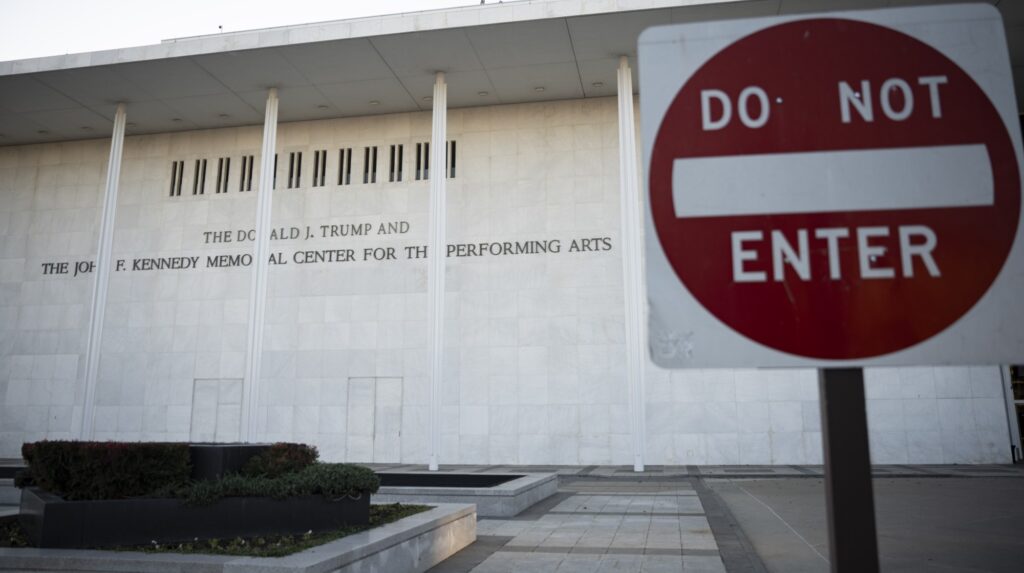
The recent decision by the board of the John F. Kennedy Center for the Performing Arts to add Donald Trump’s name to the iconic venue has sparked a significant backlash, leading to multiple performance cancellations. The announcement, made in mid-December, was intended to showcase “unequivocal bipartisan support for America’s cultural center,” according to Roma Daravi, the center’s Vice President for Public Relations. However, the fallout has revealed deep divisions within the performing arts community.
Prominent performers have responded to the name change with decisive actions. The jazz ensemble The Cookers canceled its two previously scheduled New Year’s Eve shows, a move compounded by the earlier cancellation of the center’s annual Christmas Eve Jazz concert. This shift highlights the growing discontent among artists regarding the center’s association with Trump’s brand. The New York Times reported that these cancellations are intensifying the fallout from the rebranding.
Musician Chuck Redd also announced the cancellation of his long-standing holiday “Jazz Jams” performance, which he hosted since 2006. Redd noted that the decision came after he observed the name change on the Kennedy Center’s website, followed by its display on the building itself. He explained his stance in a statement to The Associated Press, emphasizing that he could not support an institution that aligns itself with Trump’s name.
In a similar vein, the New York-based dance troupe Doug Varone and Dancers declared the cancellation of an upcoming performance scheduled for April 2024. The group’s decision was articulated through an Instagram post, where Varone expressed that they could not “permit ourselves nor ask our audiences to step inside this once great institution” following the name change.
These cancellations are part of a broader trend, following earlier artist backlash this spring, when several high-profile performers distanced themselves from the center after Trump appointed himself as its chairman. Artists have made it clear that their decisions are grounded in principle, reflecting a commitment to their values over financial gain.
Kristy Lee, a musician who also canceled her appearance at the Kennedy Center, shared her thoughts on social media, stating, “This is how I keep the lights on. But losing my integrity would cost me more than any paycheck.” Such sentiments underline the seriousness of the cancellations, which represent more than mere protests; they involve real financial stakes for the artists involved.
The wave of cancellations has drawn a sharp response from Richard Grenell, Kennedy Center President and a known Trump ally. Grenell has threatened to pursue a $1 million lawsuit against Redd, characterizing the cancellations as “classic intolerance” and labeling them as “sad bullying tactics employed by certain elements on the left.” He further claimed that Redd’s actions have financially harmed the center, citing “dismal ticket sales and lack of donor support” as contributing factors.
Grenell’s response has raised questions about the underlying issues at play. Critics argue that framing dissenting artists as extremists distracts from the implications of the name change itself. By focusing on the artists’ reactions, Grenell shifts attention away from the motivations behind the renaming, which many believe ignited the current controversy.
With the Kennedy Center planning to pursue legal action after the holidays, the situation remains tense. The unfolding drama not only impacts the institution’s reputation but also highlights the broader cultural rifts in society related to political affiliations and artistic expression.
As the Kennedy Center navigates this turbulent period, the performing arts community watches closely, aware that the decisions being made now could have lasting consequences for the future of cultural institutions in America.