Maintaining core strength is crucial for individuals over 50, as it supports posture, protects the spine, and enhances balance. As the body ages, a strong core becomes the foundation for performing daily activities with ease. Traditional static exercises, like planks, may not translate into the functional strength needed for everyday movements. Instead, incorporating dynamic bodyweight exercises can yield better results.
Bodyweight training has the added advantage of minimizing stress on the spine while allowing individuals to control intensity. This approach also encourages coordination between the hips, shoulders, and trunk, which is vital for sustaining athletic performance as one ages. Below are five bodyweight exercises that effectively challenge the core and are well-suited for those over 50.
1. Dead Bugs
The Dead Bug exercise is designed to stabilize the spine while the limbs move independently. This skill is essential for activities like walking and lifting. By reinforcing proper breathing and bracing, Dead Bugs help protect the lower back and can be scaled for difficulty without added strain.
To perform this exercise, lie on your back with arms extended toward the ceiling and knees bent at 90 degrees. Lower your right arm and left leg toward the floor while keeping your trunk stable. Alternate sides while maintaining steady breathing.
Recommended Sets and Reps: Aim for 3 sets of 8 to 10 reps per side, resting for 30 to 45 seconds between sets.
Form Tip: If your lower back lifts off the floor, shorten your range of motion.
2. Hollow Holds
Hollow Holds create tension throughout the entire core, teaching the body to brace as a unified unit. This exercise helps to enhance posture and spinal control while identifying weak links that may need attention.
To perform a Hollow Hold, brace your core and press your lower back into the floor. Hold this position while maintaining steady breathing.
Recommended Sets and Reps: Complete 3 to 4 sets of 20 to 40 seconds, resting for 45 seconds between sets.
Form Tip: Quality of the hold is more important than duration. End the set when you lose tension.
3. Bear Crawls
Bear Crawls train the core to stabilize while limbs move under load, improving coordination and shoulder stability. This movement also elevates the heart rate and builds strength that translates into everyday tasks.
Start on all fours, with your knees slightly off the ground. Crawl slowly forward, maintaining a low and controlled position.
Recommended Sets and Reps: Aim for 3 sets lasting 20 to 40 seconds, with 60 seconds of rest between sets.
Form Tip: Imagine balancing a glass of water on your back to maintain steadiness.
4. Reverse Crunches
Reverse Crunches emphasize control in the lower abdomen without undue stress on the spine. This exercise encourages the pelvis to tilt correctly, promoting healthier movement patterns.
To perform a Reverse Crunch, lie on your back with knees bent and feet lifted. Brace your core and lift your hips slightly off the floor.
Recommended Sets and Reps: Perform 3 sets of 10 to 15 reps, resting for 30 to 45 seconds between sets.
Form Tip: Focus on lifting the hips rather than swinging the legs.
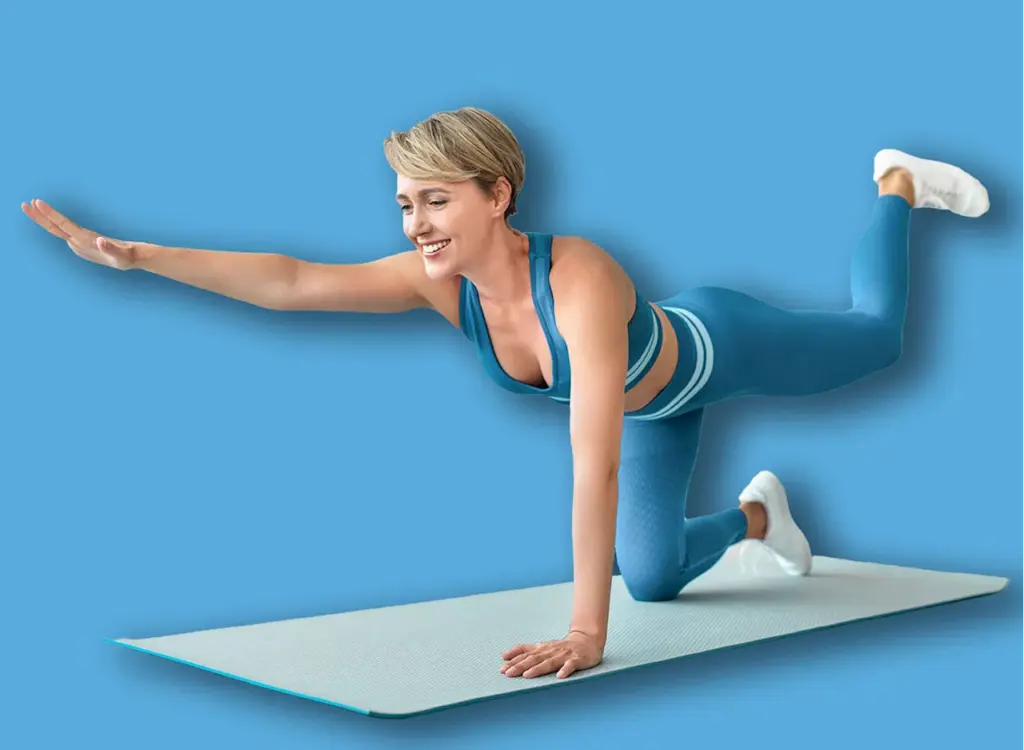
5. Bird Dogs
Bird Dogs reinforce spinal stability through controlled limb movement, improving balance and postural control. This exercise also fosters proper breathing patterns, which support core engagement.
Begin on all fours with hands under your shoulders. Extend one arm and the opposite leg simultaneously, holding briefly before returning to the starting position.
Recommended Sets and Reps: Complete 3 sets of 8 to 10 reps per side, resting for 30 seconds in between.
Form Tip: Move slowly to ensure balance and control throughout the exercise.
Incorporating these exercises into a regular fitness routine can significantly enhance core strength, which in turn supports overall mobility and stability. For individuals over 50, focusing on consistency and gradual progression in their training will yield the best results while keeping joints healthy. Regular core training not only helps in daily tasks but also contributes to improved quality of life as one ages.