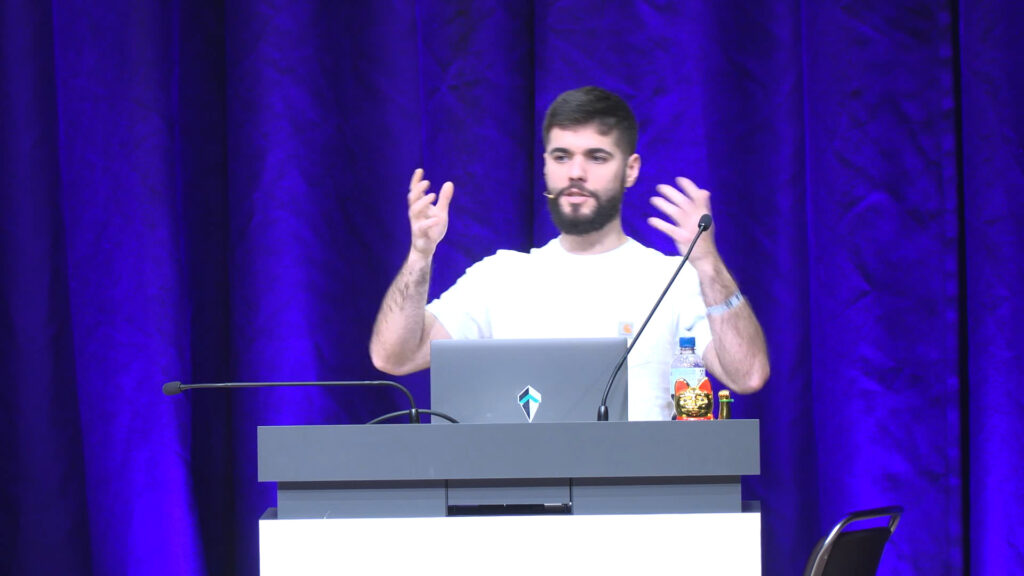
The recent presentation at the Chaos Communication Congress by Anton focused on a groundbreaking project that seeks to enhance control over Bluetooth technology using the widely used ESP32 chip. This innovative approach aims to reverse engineer the Bluetooth controller’s internal workings, providing users with more transparency and potential security applications.
Bluetooth technology is ubiquitous in modern devices, yet its inner workings often remain opaque. At the heart of Bluetooth communication is the controller chip, which operates through a specific Host-Controller Interface (HCI) protocol. Most developers interact with Bluetooth via binary libraries that abstract these details, making it challenging to gain deeper insights or control over the connection.
In his talk, Anton shared his motivation to reverse engineer these libraries, which could lead to enhanced capabilities and understanding of Bluetooth operations. His efforts culminated in the ability to transmit and receive data effectively, although he noted that creating an entirely new Bluetooth stack would require substantial effort. This foundational work has significant implications for security research, especially concerning the vulnerabilities inherent in Bluetooth technology.
Advancements in Bluetooth Control
One of Anton’s key achievements was the ability to send arbitrary packets over Bluetooth, a development that could pave the way for creating a Bluetooth fuzzing tool. This tool would allow researchers to test Bluetooth implementations for vulnerabilities, potentially improving overall security in devices that utilize this technology.
While Anton’s findings are promising, he encountered limitations. A sequence ID prevents his modifications from transforming the ESP32 controller into a fully promiscuous Bluetooth monitor. Despite this challenge, the groundwork laid by Anton opens new avenues for exploration and research in Bluetooth security.
The insights shared during the presentation highlight the importance of understanding the technologies that permeate daily life. Users and developers alike stand to benefit from a more transparent approach to Bluetooth, especially in an era where security concerns are paramount.
Anton’s work is documented in detail on his GitHub repository, where interested parties can find his write-ups and register descriptions. Although this project is not yet a plug-and-play solution, it represents a significant step forward in demystifying Bluetooth technology and enhancing user control.
By shedding light on the complexities of Bluetooth operations, Anton’s project contributes to the ongoing dialogue about security and transparency in technology. The effort to reverse engineer these systems is not just about technical prowess; it is about empowering users and researchers to better understand and secure the technologies they rely on daily.