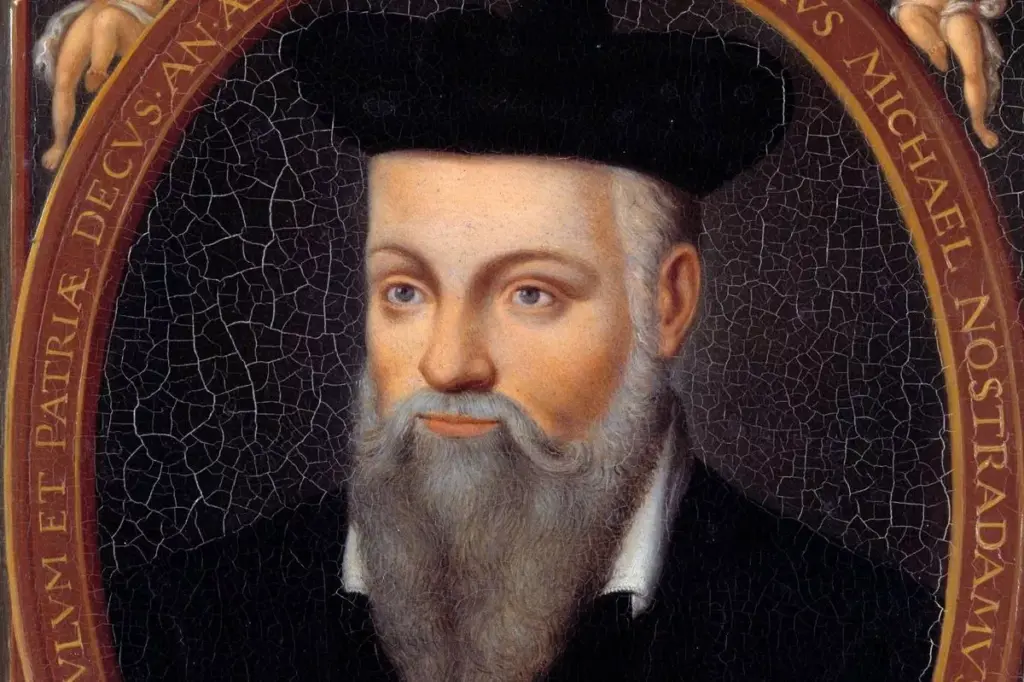
The 16th-century French astrologer Nostradamus has once again captured public attention with predictions that suggest a series of catastrophic events occurring in 2026. His enigmatic quatrains, found in his seminal work, *The Prophecies*, published in 1555, comprise a total of 942 verses that some interpret as foretelling significant global turmoil.
One of the most striking verses states: “Seven months great war, people dead through evil/ Rouen, Evreux the King will not fail.” This quatrain has led many to speculate about its relevance to today’s geopolitical landscape, particularly in relation to the ongoing conflict between Russia and Ukraine. Nostradamus has historically been linked to insights about warfare, with some suggesting that his phrase “Within two cities, there will be scourges the like of which was never seen” foreshadowed the nuclear bombings of Hiroshima and Nagasaki during World War Two, according to reports from the *Mirror*.
Predictions for 2026: A Mixed Bag of Forewarnings
Another prediction attributed to Nostradamus hints at a more whimsical event involving a “great swarm of bees” that will arise unexpectedly. Speculation suggests this might occur in 2026, particularly as the phrase is linked to the number 26. Despite the intriguing imagery, the true meaning of this prophecy remains elusive; it is unclear what the bees represent, raising questions about the feasibility of such a scenario causing any significant disruption.
In a more dramatic forecast, Nostradamus warns of a “great man” being struck down by a thunderbolt during daylight. This verse does not specify whether the individual refers to a political leader, a celebrity, or another prominent figure. The imagery of a lightning strike on a public figure has led to various interpretations, with some anticipating a notable incident—potentially on a glamorous red carpet.
Another foreboding prediction involves the picturesque region of Ticino in Switzerland. Nostradamus ominously states: “Because of the favour that the city will show… the Ticino will overflow with blood.” This alarming line could imply a mass casualty event, a severe plague, or a natural disaster affecting the area.
Interpreting Nostradamus: A Challenge for Scholars
Skeptics often highlight the challenges in interpreting Nostradamus’s quatrains. Written in Middle French, his prophecies employ intentionally ambiguous phrasing and Latin terms. The existence of multiple manuscripts, along with historical spelling variations, complicates the process of discerning Nostradamus’s true intentions. As a result, interpretations can vary widely, leaving room for both believers and skeptics to engage in spirited debate over the relevance of his work to current events.
As 2026 approaches, the intrigue surrounding Nostradamus’s predictions serves as a reminder of humanity’s enduring fascination with the future and the mysteries that lie ahead. Whether these predictions hold any truth remains to be seen, but they continue to spark interest and discussion in today’s volatile world.