Israel has officially recognized Somaliland as a sovereign state, making it the first nation to do so. This decision, announced on October 27, 2023, by Prime Minister Benjamin Netanyahu, has drawn criticism for its implications regarding Palestine, as Israel continues to reject Palestinian statehood.
Somaliland, a self-declared independent region in northern Somalia with a population exceeding 6 million, has sought international recognition since it declared independence in 1991. Until now, no UN member states had acknowledged its claim. Netanyahu characterized the recognition as aligning with the “spirit of the Abraham Accords,” agreements that sought to normalize relations between Israel and several Arab nations.
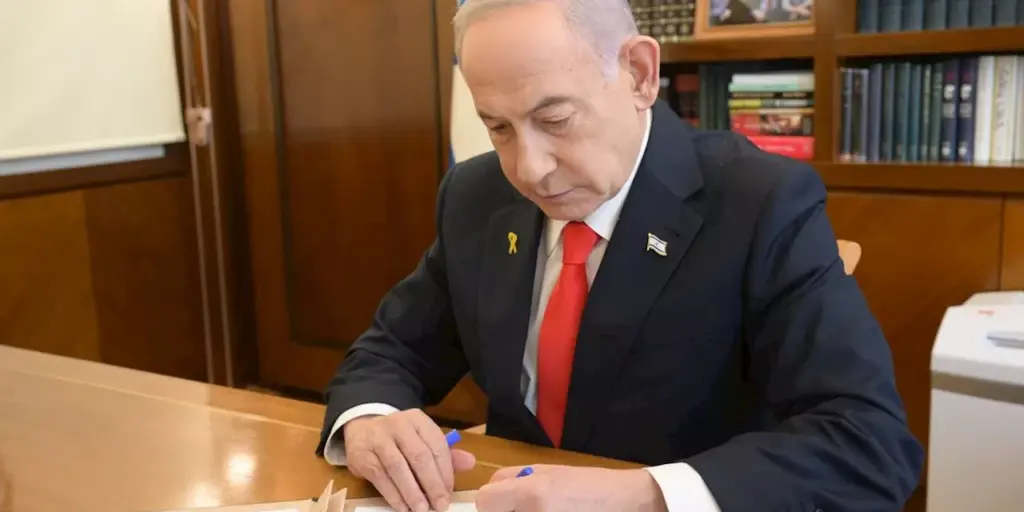
During a video call with Somaliland’s President Abdirahman Mohamed Abdullahi, Netanyahu signed the official recognition, emphasizing the significance of the relationship between Israel and Somaliland. He described it as “seminal and historic.” Abdullahi responded by stating that this recognition marks a “milestone” in Somaliland’s quest for legitimacy on the world stage.
Despite the enthusiasm surrounding Somaliland’s recognition, some analysts argue that Israel’s motivations extend beyond supporting self-determination. A report from the Guardian highlighted that Israel may be leveraging Somaliland’s strategic position, potentially as a base for military operations against the Houthi forces in Yemen. This assertion is supported by findings from a November report by a prominent Israeli think tank, which suggested that the region could facilitate military actions.
Somaliland is strategically located in the Horn of Africa, adjacent to the Arabian Peninsula. It already accommodates an air base that the United Arab Emirates has utilized for operations against Yemeni militants. These militants have previously threatened Israel’s maritime interests, particularly in the Red Sea, exacerbating tensions in the region.
The recognition has not gone unnoticed by neighboring countries. Both Egypt and Turkey condemned the agreement, asserting that it represents interference in Somalia’s domestic affairs and aligns with Israel’s expansionist policies. The foreign ministers from these nations, alongside representatives from Somalia and Djibouti, convened to affirm their commitment to Somalia’s unity and denounce Israel’s actions as efforts to displace the Palestinian people.
Critics, including Adil Haque, a professor at Rutgers Law School, have expressed concerns about Israel’s ulterior motives. They point to Netanyahu’s previous discussions with Somaliland’s leadership, reportedly offering recognition in exchange for assistance in relocating Palestinians from Gaza. Reports suggest that Israel has approached multiple nations for potential resettlement options for Palestinians, including Indonesia, Uganda, South Sudan, and Libya. Somali President Hassan Sheikh Mohamud has publicly denounced such proposals, emphasizing that forcibly relocating Palestinians is not a viable solution.
A senior Israeli official, speaking anonymously to Israel’s Channel 12, acknowledged that the recognition of Somaliland complicates Netanyahu’s longstanding assertions against the establishment of a Palestinian state. This sentiment was echoed by a report from the Times of Israel, noting that while Israel is the first country to recognize Somaliland, the international community largely regards it as part of Somalia.
As analysts continue to scrutinize the implications of this recognition, the geopolitical landscape in the region remains complex. The intersection of military interests, national sovereignty, and the ongoing Palestinian struggle for statehood underscores the contentious nature of Israel’s recent diplomatic maneuver.