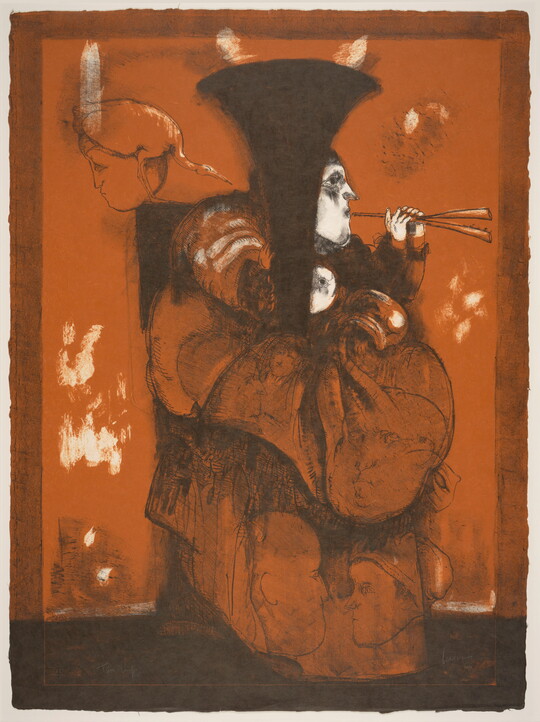
The Amon Carter Museum of American Art in Fort Worth, Texas, has unveiled a significant exhibition dedicated to the legacy of Ernest de Soto, recognized as the first Latino master printer in the United States. The exhibition, titled Ernest de Soto, Master Printer, showcases 28 lithographs, marking the first time the museum has presented de Soto’s work. This exhibition not only highlights his artistic contributions but also celebrates the collaborative nature of lithography.
This exhibition features works by nine prominent artists with whom de Soto collaborated during his tenure at the Tamarind Lithography Workshop, now known as the Tamarind Institute, in the 1960s. These artists include Ruth Asawa, Herbert Bayer, José Luis Cuevas, Gego, Robert Hansen, Allen Jones, Matsumi Kanemitsu, George Earl Ortman, and George Sugarman. Each piece reflects the innovative spirit and artistic dialogue fostered at the Tamarind Workshop, which played a crucial role in the development of lithography as a medium for fine art.
The collection displayed in this exhibition is drawn exclusively from the Amon Carter’s holdings. The museum’s founder, Ruth Carter Stevenson, made a remarkable effort to acquire nearly every print produced at the Tamarind Workshop between 1963 and 1970. This endeavor resulted in a comprehensive collection of over 2,300 lithographs, solidifying the museum’s commitment to documenting and preserving a pivotal chapter in print history.
A Legacy of Collaboration and Innovation
Ernest de Soto’s impact on the art world extends beyond his technical skills as a printer. He was instrumental in elevating lithography to a respected art form, collaborating with some of the most influential artists of his time. The exhibition allows visitors to explore the dynamic relationships between de Soto and these artists, providing insight into the creative processes that shaped their works.
Visitors to the Amon Carter Museum can view the exhibition until further notice, with each lithograph offering a glimpse into the collaborative spirit that defined the Tamarind Workshop. The museum’s dedication to showcasing de Soto’s contributions serves as a reminder of the importance of diversity in the arts and the rich history of Latino artists in the United States.
As the exhibition unfolds, it invites audiences to engage with the art and understand the significance of de Soto’s work in the broader context of American art history. This celebration of his legacy not only honors his achievements but also inspires future generations of artists and printers to continue exploring the possibilities of lithography.
In the words of Beethoven, “Music is a higher revelation than philosophy.” In a similar vein, the exhibition at the Amon Carter Museum reveals the profound impact of collaborative art, showcasing how the synergy between artists and printers can lead to remarkable creative expressions.