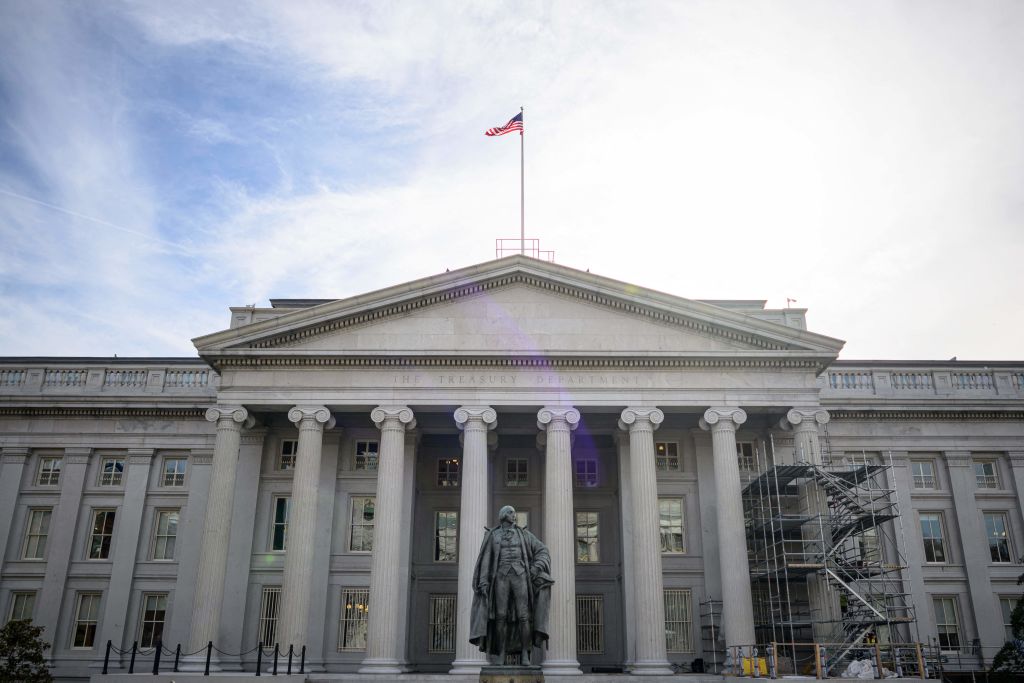
The US Treasury is seen in Washington, DC on November 17, 2023. The US budget deficit widened to $1.7 trillion in the 12 months to September 30, 2023, pushing up federal debt to 123 percent of economic output, according to the Treasury Department. (Photo by Mandel NGAN / AFP) (Photo by MANDEL NGAN/AFP via Getty Images)
URGENT UPDATE: More than 150 individuals and companies have just been sanctioned by the United States for facilitating money laundering linked to drug trafficking organizations. This significant move comes as the U.S. government intensifies efforts to combat illicit drug trade.
As of now, 64 individuals and 87 companies have been blacklisted, freezing all assets under U.S. jurisdiction and prohibiting any transactions with them. This year’s sanctions reflect a stern response to the growing influence of international drug cartels, particularly from Mexico, Colombia, Albania, India, and Canada.
One of the most notable figures on the list is Ryan James Wedding, a former Canadian Olympian. He is accused of collaborating with the notorious Sinaloa Cartel and remains at large after being placed on the FBI’s Ten Most Wanted Fugitives list earlier this year. U.S. officials allege that his network trafficked tons of cocaine through Colombia and Mexico for distribution across North America.
According to a report from Milenio, 55 of the sanctioned individuals are Mexican, with others originating from Albania, Colombia, India, and Canada. Remarkably, 35 individuals have been designated under terrorism authorities, marking an unprecedented action by U.S. authorities. Among them, at least 26 are linked to the Sinaloa Cartel, with another 16 connected to the Cártel Jalisco Nueva Generación (CJNG), led by the infamous Nemesio Oseguera Cervantes, also known as “El Mencho.”
In November 2023, the U.S. took significant action against alleged associates of the Sinaloa Cartel, imposing penalties on members of the Hysa family for allegedly using their gambling businesses in Mexico to launder millions for the cartel.
The sanctioned companies reflect a troubling trend, with nearly two-thirds flagged for alleged ties to terrorism. These firms consist of closely held businesses operating largely out of public view, including fuel companies, tourism-related businesses, and entertainment venues. According to the U.S. Treasury Department, these entities are critical financial tools for criminal and terrorist networks.
All sanctioned companies are based in Mexico, with operations concentrated in just 12 states. Sinaloa, Baja California, and Jalisco alone account for 49 of the 87 companies, representing about 56 percent of the total. The remaining companies are distributed across states such as Nuevo León, Quintana Roo, Mexico City, and Estado de México.
This urgent update signals a critical moment in the fight against drug trafficking and money laundering, as U.S. authorities ramp up their efforts to dismantle these networks. As developments unfold, the international community watches closely.
Stay tuned for more updates on this rapidly evolving situation.