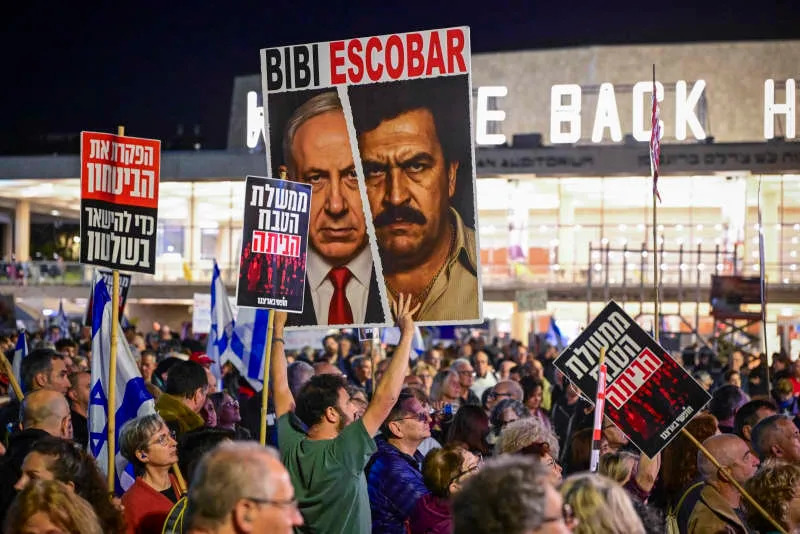
The Israeli government is poised to advance two controversial measures that could significantly impact both accountability regarding the October 7 Hamas attack and the operation of military media outlets. On October 7, 2023, the Ministerial Committee for Legislation will debate a bill proposed by Likud MK Ariel Kallner aimed at establishing an inquiry into the events of that day. Simultaneously, the cabinet will consider a proposal to close the IDF’s Army Radio.
The Kallner bill seeks to set up an inquiry committee not as a state commission, which would typically be appointed by the president of the Supreme Court, but rather through the Knesset and the government. This proposed committee would consist of six members, equally divided between the coalition and opposition, along with four representatives from bereaved families to oversee the committee’s activities.
Proponents of this measure argue that it would enhance accountability and restore the military’s nonpartisan identity. They believe that a Knesset-appointed committee would be more representative and trustworthy than one established through the judiciary. The bill includes provisions for dispute resolution among committee members, allowing for the appointment of co-chairs if consensus on leadership is not reached.
Critics, however, express concerns that this approach undermines the independence of state commissions and risks politicizing the inquiry. They argue that a committee created by those potentially under investigation may struggle to achieve genuine accountability, leading to questions about its legitimacy. Many call for a fully independent state inquiry instead.
In conjunction with the inquiry proposal, the cabinet will also deliberate the fate of Army Radio. Led by Defense Minister Israel Katz, the plan aims for a phased closure of the station, beginning with appointing a professional team to assess the implications for current employees and explore options for continuing its music station, Galgalatz, in a different framework. Supporters argue that a military-run outlet should refrain from broadcasting political content to the public, thereby reaffirming the IDF’s commitment to a nonpolitical stance.
Opponents warn that closing Army Radio would infringe upon press freedom and limit democratic spaces. They highlight the station’s historical role in editorial independence and contend that a government decision to close it without thorough legislation may encounter legal challenges, potentially leading to petitions in the High Court of Justice.
These two proposals signal a politically charged week in Israel, reflecting a clash between public demands for accountability following the October 7 incident and efforts to reshape the media landscape under executive authority. As discussions unfold, the implications for both military accountability and freedom of the press remain at the forefront of national discourse.