A new solution to high drug development costs is emerging from a DIY project. An innovator known as Triggy has created a 96-channel multi-pipette for approximately $300, significantly lower than the professional versions, which can cost as much as $18,000. This breakthrough allows for parallel experimentation, reducing the time and resources needed in drug and chemical development.
The complexity and expense of developing new pharmaceuticals stem from the vast number of experiments required. Traditional methods often involve synthesizing and testing hundreds, if not thousands, of compounds sequentially. This process can be both time-consuming and inefficient. By employing a multi-channel pipette, researchers can conduct numerous experiments simultaneously, streamlining the development process.
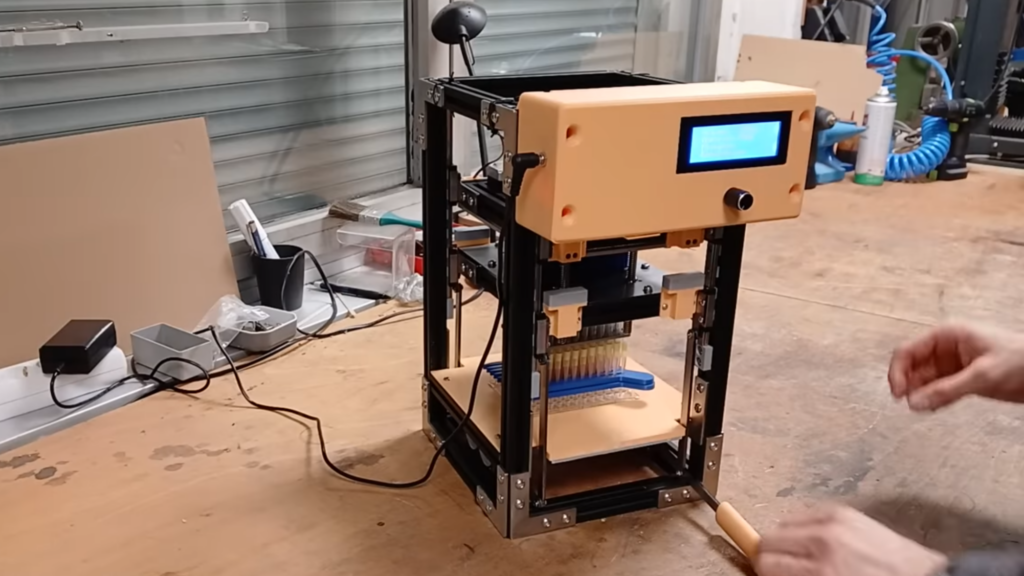
Triggy designed his multi-pipette using an eight-by-twelve grid of syringes held in place by a sturdy frame. The mechanism operates through four stepper motors that actuate the plungers of each syringe. A unique feature of this design is the vertical movement of the syringe assembly, allowing for easy placement of multi-well plates beneath the dispensing tips. This innovation simplifies the complex task of transferring liquids across multiple vessels.
Testing the accuracy of his creation posed a challenge for Triggy. Nevertheless, preliminary tests yielded promising results. To demonstrate the functionality of the multi-pipette, he 3D-printed two plates featuring parallel channels and filled them with varying concentrations of watercolors. The device successfully collected liquid from each channel and combined them in a multi-well plate, producing a visually appealing gradient of colors.
The ability to test 96 variations of a single experiment concurrently opens new avenues for research and experimentation. While Triggy‘s machine is designed for home use and preliminary tests indicate satisfactory performance, it is essential to note that rigorous testing is needed before it can be relied upon for critical applications, especially in fields like medicine where precision and certification are paramount.
In light of the increasing interest in DIY laboratory equipment, this project highlights the potential of miniaturization and automation in scientific research. Previous advancements in this area have included various homemade robotics that assist in laboratory tasks, showcasing the possibilities for innovation within the scientific community.
As the demand for efficient drug development continues to rise, projects like Triggy‘s multi-channel pipette exemplify how creativity and engineering can lead to cost-effective alternatives in research. The potential impact on the pharmaceutical industry could be substantial, paving the way for quicker discoveries and improved accessibility to experimental tools.
Thanks to Mark McClure for bringing this innovative project to light.