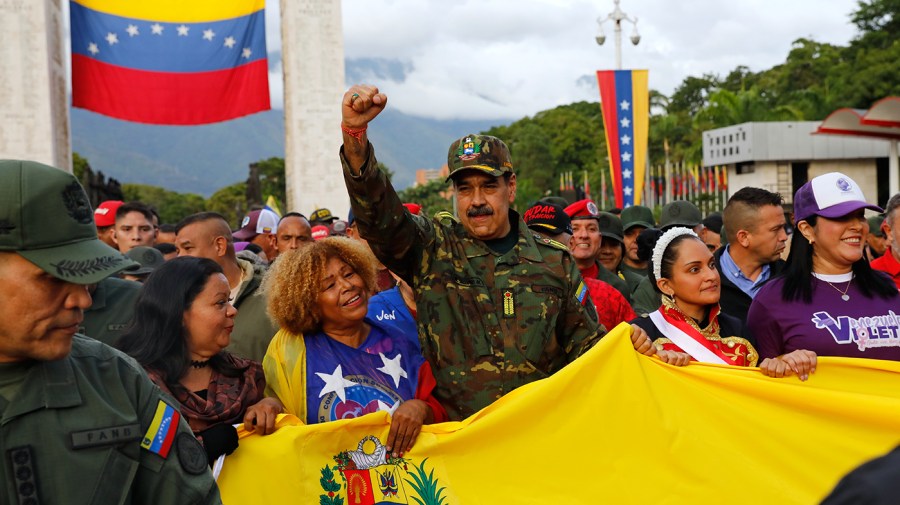
A recent poll indicates that a significant majority of Americans oppose military intervention in Venezuela. The survey, conducted by Quinnipiac University and released on March 15, 2024, reveals that 63 percent of respondents are against U.S. military action, while only 25 percent support such measures. This finding comes as the administration under former President Donald Trump intensifies its efforts against Venezuelan President Nicolás Maduro.
The poll results highlight a growing sentiment among the American public concerning U.S. foreign policy in Latin America. Many citizens express concerns that military involvement could exacerbate the already dire humanitarian situation in Venezuela. The survey reflects a broader desire for diplomatic solutions rather than military responses to international conflicts.
Public opinion on military intervention has shifted significantly in recent years. This survey illustrates a clear divergence from the more interventionist policies of past administrations. As the political landscape evolves, Americans appear increasingly wary of engaging in military actions that could have far-reaching consequences for both the U.S. and the countries involved.
In addition to the opposition to military action, the poll also asked respondents about their views on the Trump administration’s overall handling of the situation in Venezuela. While a substantial portion of the population remains critical of military options, many are still grappling with the complexities of the crisis, including economic instability and widespread human rights violations in Venezuela.
The Quinnipiac University poll surveyed a diverse group of participants, ensuring a representation of various demographics across the United States. The findings provide valuable insight into the public’s priorities and concerns regarding foreign policy, especially in relation to Latin America.
As discussions on Venezuela continue to unfold, this polling data will likely inform both public discourse and policymakers’ approaches to the crisis. The emphasis on diplomatic engagement over military intervention may shape future strategies as the U.S. seeks to navigate its relationship with Venezuela and support the Venezuelan people during this challenging period.
Overall, the growing opposition to military action in Venezuela underscores a critical moment in U.S. foreign policy, reflecting a populace that favors dialogue and peaceful resolutions over conflict. As the situation develops, it remains to be seen how these public sentiments will influence political decision-making in Washington.