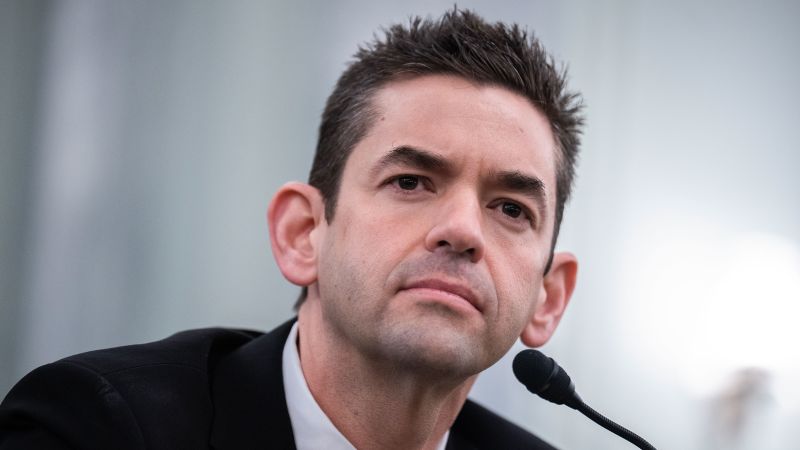
Tech billionaire Jared Isaacman has officially been appointed as the new administrator of NASA, following a significant Senate confirmation vote that concluded with a tally of 67 to 30. Isaacman’s appointment marks the end of a protracted selection process initiated by former President Donald Trump, who first nominated him in late 2024. With this confirmation, Isaacman is poised to lead the agency ahead of the highly anticipated launch of Artemis II, a mission set to carry four astronauts around the moon, representing the farthest human travel into space since the Apollo program concluded in 1972.
Isaacman, who is also the CEO of Shift4—a payment processing company he founded at the age of 16—has made headlines in the space industry for self-funding experimental flights to Earth orbit. He has completed two spaceflights in partnership with Elon Musk’s SpaceX, establishing a reputation as a bold innovator in a rapidly evolving sector that increasingly leans towards private enterprise.
Support and Controversy Surrounding the Nomination
Supporters of Isaacman view his leadership as a potential catalyst for competition among private space companies. They express optimism that he will encourage these companies to align with NASA’s objectives while focusing on cutting-edge technologies. However, Isaacman’s nomination has not been without its critics. Concerns have emerged regarding potential conflicts of interest due to his financial ties with SpaceX.
On Monday, Senator Edward Markey, a Democrat from Massachusetts, criticized SpaceX for its refusal to disclose the financial details surrounding Isaacman’s spaceflights. He stated, “This is extremely suspicious. SpaceX has billions to gain from having a friendly NASA administrator, and it seems only fair that the American people understand the extent to which Isaacman and SpaceX are financially intertwined.” Markey had previously requested that SpaceX release Isaacman from a non-disclosure agreement that has prevented him from sharing this information directly with Senators.
Recent financial disclosures indicate that Isaacman’s ongoing partnership with SpaceX for a program known as Polaris is valued at over $50 million. Additionally, he has reported generating more than $5 million in capital gains from investments in SpaceX.
During his confirmation hearing, Isaacman attempted to alleviate concerns about his associations with Musk, stating, “I led two missions to space at SpaceX because it’s the only organization that can send astronauts to and from space since the Shuttle was retired. And in that respect, my relationship is no different than that of NASA.”
As Isaacman prepares to assume his new role, the space community awaits the implications of his leadership on NASA’s future direction and its partnerships with private companies. The confirmation signifies a pivotal moment for the agency as it navigates the challenges and opportunities presented by an increasingly commercialized space landscape.
This story will continue to develop as more information becomes available regarding Isaacman’s plans and initiatives at NASA.