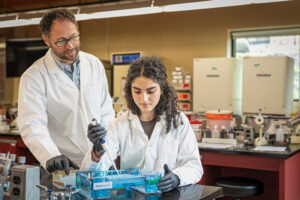
Victoria McCoy, an assistant professor at the University of Wisconsin-Milwaukee (UWM), has played a significant role in a groundbreaking research article that explores the connection between horseshoe crab fossils and microbial death in animals. The study, published in 2023, sheds light on how these ancient creatures can inform modern science regarding the decline of animal populations due to microbial influences.
The research highlights the unique characteristics of horseshoe crabs, which have existed for over 450 million years, making them invaluable to scientific inquiry. The fossilized remains provide critical insights into past ecosystems and how microbial life has historically impacted animal health.
Linking Ancient Fossils to Modern Challenges
The article points out that horseshoe crabs possess an exceptional immune response, which may hold clues for understanding current microbial threats to wildlife. According to McCoy, “The survival of horseshoe crabs through various mass extinction events offers a valuable perspective on how organisms adapt to microbial challenges.” This perspective is crucial as scientists strive to understand the implications of microbial pathogens on contemporary animal populations.
Fossils examined in the study were sourced from various sites, with a particular focus on those unearthed in North America. The findings not only contribute to paleontological knowledge but also enhance our understanding of biodiversity and ecosystem resilience.
The research team leveraged advanced imaging techniques and analytical methods to study the fossils, revealing previously unknown aspects of horseshoe crab biology and their interactions with microbial life. The implications of this work extend beyond academic circles; they may inform conservation efforts and public health strategies aimed at protecting vulnerable species.
Implications for Conservation and Public Health
The study underscores the importance of integrating paleontological research with contemporary environmental challenges. As habitats continue to change due to climate change and human activity, understanding the historical context of species like the horseshoe crab becomes increasingly vital. The information gleaned from these fossils can aid in predicting how current ecosystems may respond to emerging microbial threats.
In conclusion, Victoria McCoy and her colleagues have opened new avenues for research that bridge the gap between ancient life forms and modern ecological issues. Their work serves as a reminder of the interconnectedness of life across time and the ongoing need for scientific exploration to safeguard the future of biodiversity. As this research gains traction, it is likely to inspire further studies aimed at unraveling the complex relationships between organisms and their microbial environments.