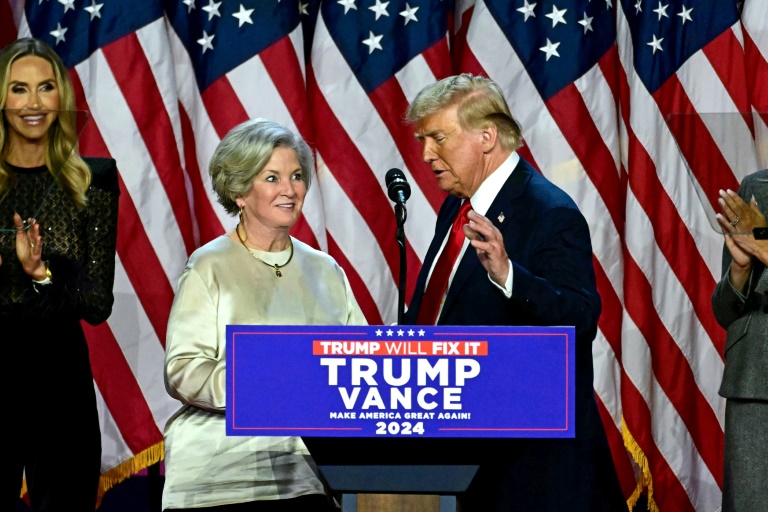
The relationship between the United States and Europe is facing significant strain following remarks made by US President Donald Trump regarding the continent’s handling of immigration and its support for Ukraine. In a recent interview with Politico, Trump characterized European nations as “weak” and “decaying” and suggested that Russia holds the “upper hand” in its ongoing conflict with Ukraine. This rhetoric comes as Trump’s administration releases a new national security strategy, which criticizes European governments for their approach to the war and argues that unrealistic expectations are hindering peace efforts.
Trump’s critique of Europe is not merely a rhetorical flourish; it reflects a broader strategy that positions the continent as an impediment to stability in relations with Russia. The new national security strategy states that “a large European majority wants peace,” but accuses European officials of undermining democratic processes that could lead to resolution. This document has elicited a strong response from European leaders, including Friedrich Merz, the Chancellor of Germany, who expressed that aspects of the strategy are “unacceptable” from a European perspective.
The Kremlin has seized upon Trump’s comments as an opportunity to reinforce its narrative. Dmitry Peskov, the Kremlin spokesman, welcomed the strategy, stating that it aligns with Russia’s views on the necessity of dialogue and constructive relations. Russian officials, including Kirill Dmitriev, CEO of the Russian Direct Investment Fund, have publicly supported Trump’s statements, highlighting the growing chasm between the US and its European allies.
Notably, Trump’s remarks were prompted by a question concerning the European Union’s decision to impose a $140 million fine on X, the platform formerly known as Twitter, for breaching regulations related to online content. Elon Musk, the owner of X, responded by calling for the abolition of the EU, further intensifying the discourse surrounding European governance.
As the situation develops, the inconsistency in Russian officials’ criticisms of Europe becomes evident. While they amplify accusations of democratic backsliding, Russia itself has curtailed political competition and freedom of the press under President Vladimir Putin’s leadership. The irony is not lost on observers, as the Kremlin uses social media to disseminate its messages, despite blocking access to such platforms for the general public in Russia.
Russian Messaging Amplifies Tensions
The Russian government appears to be strategically leveraging the current situation to undermine support for Ukraine among European nations. Increased Russian messaging includes threats made by political scientist Sergey Karaganov, who provocatively stated that Russia is “at war with Europe,” hinting at a broader agenda than merely dealing with Ukraine.
In a recent television interview, he articulated a stark view that the conflict will not conclude until Europe is “smashed, morally and politically.” While he claimed not to speak for Putin, his sentiments resonate with the aggressive posturing often seen in Russian rhetoric. Before meetings with Trump’s special envoy and family member Jared Kushner, Putin asserted that Russia is “ready right now” for conflict with Europe, although he claimed there were no plans to initiate war.
This type of saber-rattling serves to instill fear among European nations, exacerbating tensions that threaten the transatlantic alliance. As Volodymyr Zelensky, the President of Ukraine, seeks to bolster support from leaders in the UK, France, and Germany, it is clear that the stakes remain high.
The fallout from Trump’s recent remarks and the new national security strategy echoes past instances where tensions between the US and Europe have surfaced. The shock felt in European capitals mirrors reactions to US Vice President JD Vance’s address at the Munich Security Conference earlier this year. The potential for a shift in European sentiment towards the war in Ukraine, as influenced by US policy, could have far-reaching implications.
As the dynamics continue to evolve, both the US and Europe find themselves navigating a complex landscape shaped by political rhetoric and military realities. The interaction between these global powers will likely define the course of the conflict in Ukraine and the future of NATO relations in the coming months.