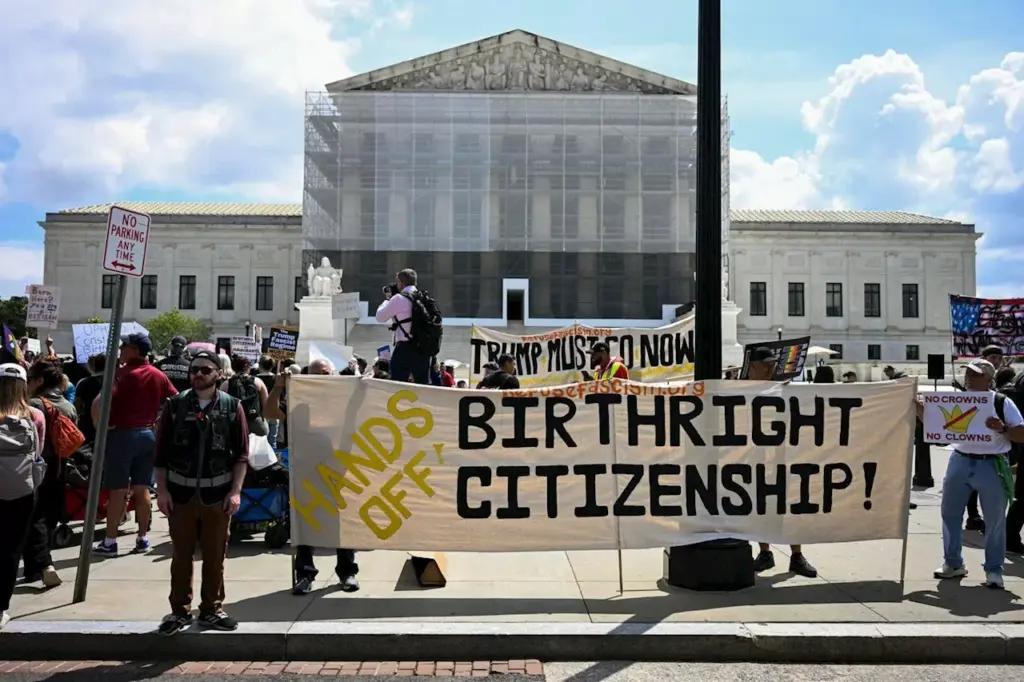
The Supreme Court of the United States is set to review a significant challenge to birthright citizenship initiated by an executive order from former President Donald Trump. This case could reshape the legal landscape surrounding citizenship in the country, potentially overturning a law that has been in place for more than 200 years. The executive order, signed in January 2025, aims to deny citizenship to children born on American soil to undocumented immigrants and certain temporary foreign residents.
The legal journey of this executive order has been tumultuous, facing various challenges that have kept its implementation on hold. The Supreme Court has agreed to hear oral arguments regarding this matter in the coming months, with a decision expected by June 2025 or July 2025. The constitutional implications of this order are profound, as it directly contests the 14th Amendment, which states, “All persons born or naturalized in the United States, and subject to the jurisdiction thereof, are citizens of the United States and of the State wherein they reside.”
The potential ramifications of removing birthright citizenship are vast. According to research from the Migration Policy Institute and Penn State’s Population Research Institute, approximately 255,000 children born annually in the U.S. could be left without citizenship if this executive order is upheld. Furthermore, projections indicate that the number of immigrants lacking permanent legal status could rise to 2.7 million by 2045 and escalate to 5.4 million by 2075.
This case is not just a legal battle; it touches the lives of millions and could redefine the concept of citizenship in America. As the Supreme Court prepares to deliberate, the implications of its ruling will be felt across communities, influencing immigration policies and the rights of future generations. The discussions surrounding this issue highlight the broader national conversation about immigration, legal status, and human rights within the context of American society.
As the oral arguments approach, stakeholders across the political spectrum are preparing for a pivotal moment that could alter the trajectory of U.S. immigration law. Observers anticipate that the ruling will prompt significant responses from various advocacy groups, lawmakers, and citizens alike, reflecting the contentious nature of immigration policy in the nation. The outcome will not only affect the legal framework but also resonate deeply with the everyday lives of families and individuals navigating the complex landscape of citizenship and immigration.