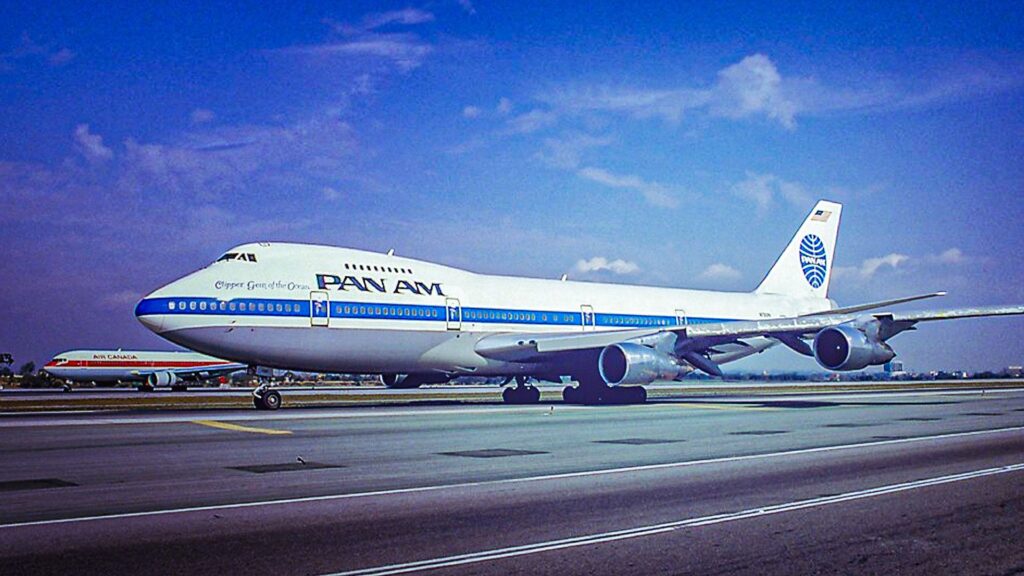
Pan American World Airways, commonly known as Pan Am, ceased operations on December 4, 1991, marking the end of an era for one of the United States’ most iconic airlines. Once a symbol of American aviation, Pan Am struggled financially for years before its final shutdown, a result of increased competition, significant operational challenges, and catastrophic events that undermined public confidence.
The airline’s decline began in earnest after the deregulation of the U.S. airline industry in 1978. The shift allowed competitors with extensive domestic networks to feed passengers directly into international flights, a capability Pan Am lacked. In an attempt to address this gap, the airline pursued the acquisition of National Airlines in 1980, but this endeavor only added layers of debt and complexity. With dwindling cash reserves, Pan Am began selling valuable assets, further eroding its operational capacity.
The situation worsened with external shocks that further destabilized the airline. The 1988 Lockerbie bombing, which resulted in the deaths of 270 people, had a profound impact on Pan Am’s reputation and finances. The subsequent Gulf crisis in 1990-1991 led to soaring fuel prices, compounding the airline’s struggles. By January 1991, Pan Am filed for Chapter 11 bankruptcy protection, attempting a restructuring that included selling key routes to Delta Air Lines.
From Humble Beginnings to Global Icon
Founded in 1927, Pan American World Airways began as a small airmail operation, quickly evolving under the leadership of Juan Trippe. The airline launched scheduled commercial flights between Key West, Florida, and Havana, Cuba, at a time when international routes were becoming increasingly important. By the 1930s, Pan Am had pioneered long-distance flights using “Clipper” flying boats, connecting cities across oceans and establishing itself as the primary international carrier for the United States.
Throughout the mid-20th century, Pan Am played a crucial role in shaping the aviation landscape. The introduction of the Boeing 707 marked the beginning of the jet age, allowing the airline to offer faster, more efficient flights. The launch of the Boeing 747 on January 22, 1970, further revolutionized air travel, making it accessible to a broader audience. By the late 1960s and early 1970s, Pan Am’s blue globe logo had become synonymous with international travel, boasting a fleet of 150 jets serving 86 countries across the globe.
At its peak, Pan Am carried approximately 6.7 million passengers in 1966 alone, dominating routes between New York and Europe, as well as connections to South America and the Caribbean. The airline’s commitment to service and innovation helped it maintain a prestigious identity, offering amenities that made flying feel exclusive and luxurious.
The Decline and Final Days
Pan Am’s challenges intensified in the 1970s, as the airline faced a structural mismatch between its international focus and the emerging domestic airline market. While competitors thrived on their extensive domestic networks, Pan Am struggled with high fixed costs associated with its global footprint, which included expensive overseas operations and a premium service model. This situation limited the airline’s ability to adapt to changing market conditions, especially during economic downturns.
The 1973-1974 oil crisis and subsequent recession placed additional financial strain on the airline. As demand for air travel fluctuated and operational costs soared, Pan Am increasingly relied on asset sales and short-term financing to remain afloat. This strategy provided temporary relief but ultimately reduced the airline’s ability to recover from shocks.
By the late 1980s, Pan Am’s route network had diminished significantly, and its operations were hampered by high fixed costs. The Lockerbie bombing further eroded consumer confidence and placed additional financial burdens on the airline. Despite efforts to reinvent itself as a smaller carrier focused on Miami International Airport, Pan Am’s plans fell apart in the face of persistent losses.
On December 4, 1991, Pan Am ceased operations, leaving thousands of employees stranded and its once-proud routes absorbed by competing airlines. The airline’s abrupt exit from the market ended a legacy that had shaped modern aviation.
Despite its downfall, Pan Am’s legacy endures. The airline’s innovations laid the groundwork for contemporary international air travel, particularly transatlantic routes. Many of today’s U.S.-based services to Europe echo the frameworks established by Pan Am. The airline’s influence persists through Delta Air Lines, which took over many of its former routes, and its contributions to the early jet travel era.
Pan Am serves as both an inspiration and a cautionary tale in the aviation industry, highlighting the importance of strategic management, adaptability, and the lasting impact of brand legacy. Even decades after its closure, the story of Pan American World Airways remains a significant chapter in the history of commercial aviation.