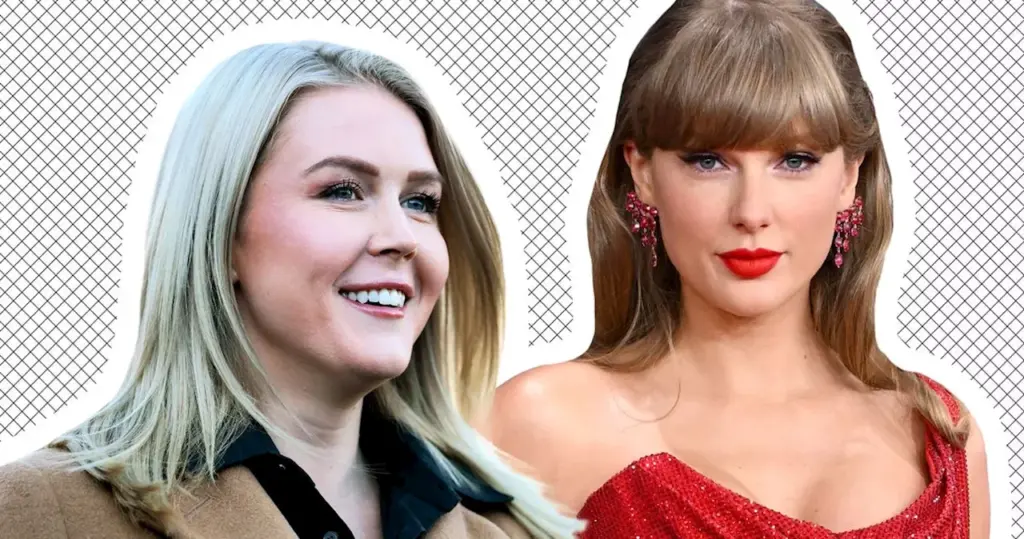
As the annual tradition of Spotify Wrapped unfolds, White House Press Secretary Karoline Leavitt has revealed her top artists for the year, notably including pop icon Taylor Swift. This revelation, shared on her Instagram Stories, has sparked conversations about her musical preferences, particularly given her association with former President Donald Trump.
Leavitt’s Spotify Wrapped highlights a mix of artists that has drawn attention, especially considering the contentious history between Swift and Trump. The singer has been vocal in her political beliefs, notably endorsing Vice President Kamala Harris during the 2020 election. Trump’s reaction to Swift’s endorsement was dismissive, as he publicly stated his disdain for her music and even claimed she was “no longer ‘HOT'” on his social media platform, Truth Social, in May 2023.
The irony of Leavitt’s admiration for Swift is palpable. As a member of Trump’s administration, she has often echoed his controversial rhetoric. Yet her interest in Swift suggests a more complex relationship with the pop star’s music than one might expect. It is not entirely surprising, as Swift has garnered a notable following among conservative audiences, who appreciate her artistic contributions despite the political divide.
Swift’s influence continues to reach far beyond her music. She has become a cultural touchstone, with her fans—often referred to as “Swifties”—spanning various demographics and political beliefs. Leavitt’s acknowledgment of her music could indicate a broader acceptance of diverse musical tastes within political circles.
In the ever-evolving landscape of celebrity and politics, the intersection between Leavitt’s role and her personal preferences illustrates how public figures navigate their identities. While Trump has cultivated a brand of hostility towards Swift, Leavitt’s Spotify Wrapped may suggest a departure from that narrative, opening up discussions about personal choice amid political affiliations.
As the year progresses, it will be interesting to observe how this dynamic unfolds, especially considering the cultural significance of music in shaping public discourse. Leavitt’s revelation adds a layer of complexity to the ongoing dialogue around celebrity influence and political identity in contemporary society.