Federal agents have launched a significant immigration operation in New Orleans, named ‘Catahoula Crunch’, with the aim of detaining individuals released after arrests for violent crimes. This two-month initiative has already resulted in arrests and ignited protests from local officials and immigrant rights advocates who fear it may disproportionately impact innocent families and disrupt the local economy.
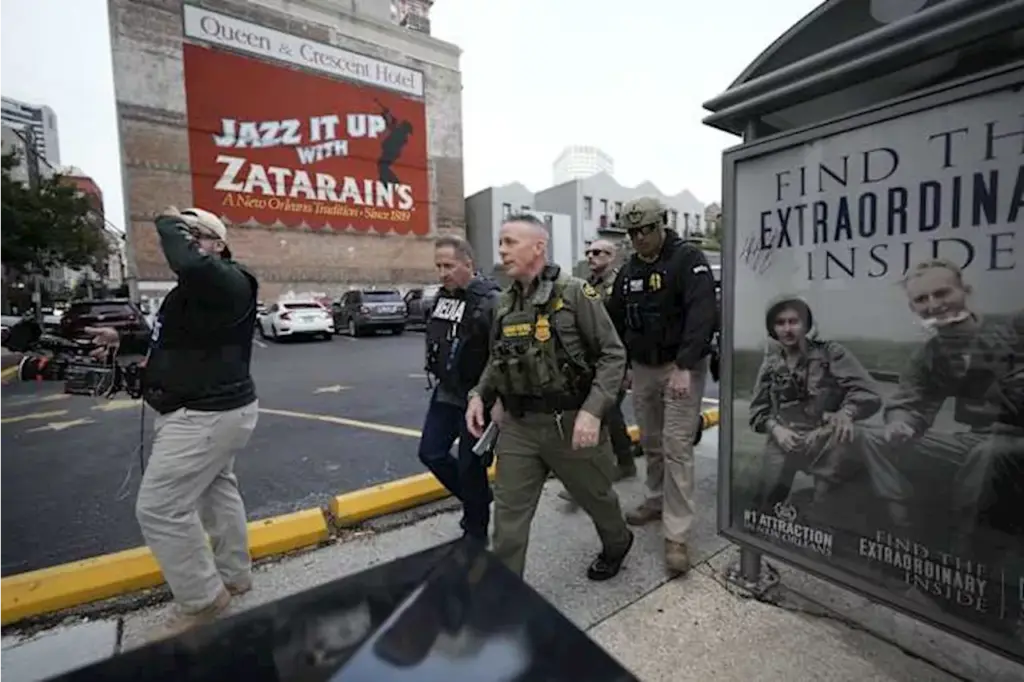
The operation, which began on October 4, 2023, involves numerous agents from Customs and Border Protection and U.S. Immigration and Customs Enforcement. Agents have been seen patrolling neighborhoods with large immigrant populations and conducting arrests in various locations, including parking lots of home improvement stores. Local leaders, including New Orleans City Council President J. P. Morrell, have raised concerns about the potential for a broad and indiscriminate sweep, suggesting that the operation targets many who are not violent offenders at all.
Morrell stated, “There is no rational basis that a sweep of New Orleans, or the surrounding parishes, would ever yield anywhere near 5,000 criminals, let alone ones that are considered ‘violent’ by any definition.” According to Census Bureau data, the New Orleans metropolitan area had a foreign-born population of approximately 100,000 residents last year, with nearly 60% not being U.S. citizens. Morrell emphasized that the connection between illegal immigration and violent crime is minimal, especially as crime rates in New Orleans have reportedly reached historic lows.
The operation follows a similar crackdown in Chicago earlier this year, which led to over 4,000 arrests. In that instance, many detainees had no prior criminal records, raising questions about the effectiveness and fairness of such operations. Public records indicate that out of approximately 1,900 arrests made between early September and mid-October in the Chicago area, only about 15% had criminal convictions, primarily for nonviolent offenses.
Amid the ongoing operation, local residents have voiced their distress. Alejandra Vasquez, who manages a social media account that tracks federal agents’ activities, reported receiving numerous messages from concerned individuals. “My heart is so broken,” Vasquez remarked. “They came here to take criminals, and they are taking our working people. They are not here doing what they are supposed to do. They are taking families.”
Political support for the operation has emerged from state officials, including U.S. House Speaker Mike Johnson, who has publicly endorsed the crackdown. Johnson criticized “Democrats’ sanctuary city policies,” claiming they have made communities unsafe. His social media posts have echoed the sentiments of many local Republicans who argue that law enforcement must take a stronger stance against immigration violations.
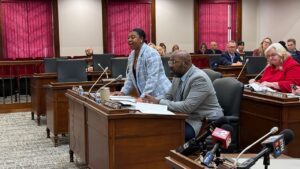
The operation has not only attracted the attention of local leaders but has also led to public protests. During a recent New Orleans City Council meeting, several dozen protesters were removed after chanting “Shame” in response to discussions about the operation. Police were seen physically escorting some individuals out of the building, highlighting the rising tensions surrounding the crackdown.
According to Tricia McLaughlin, a spokesperson for the Department of Homeland Security, the focus of the operation is to apprehend immigrants who have been released after arrests for violent crimes such as homicide, kidnapping, and robbery. “In just 24 hours on the ground, our law enforcement officers have arrested violent criminals with rap sheets that include homicide, kidnapping, child abuse, robbery, theft, and assault,” McLaughlin stated. However, the total number of arrests made thus far has not been disclosed.
Concerns persist among immigrant rights groups that the operation may extend its reach beyond those with violent records. Lesli Harris, a member of the New Orleans City Council, expressed skepticism about the claim that there are 5,000 violent offenders in the region. “What we’re seeing instead are mothers, teenagers, and workers being detained during routine check-ins, from their homes and places of work,” Harris noted. She emphasized that immigration violations are civil matters and that targeting thousands of residents who pose no threat could have devastating effects on families and the local economy.
As New Orleans continues to grapple with the implications of this federal immigration operation, the community remains divided. The intersection of law enforcement and immigration policy is under scrutiny, as local leaders advocate for a more balanced approach that prioritizes the welfare of families and the economic stability of the city.