UPDATE: In a shocking assessment, former Russian General Vladimir Chirkin has given the entire Russian intelligence community a failing grade for its performance leading up to the Ukraine invasion. In a candid interview with Russian radio outlet RBC, conducted on November 27, Chirkin criticized the Kremlin for its miscalculations and unpreparedness in early February 2022.
Chirkin, who commanded Russia’s ground forces from 2012 to 2013, stated that Russian leadership was misled about the political landscape in Ukraine, believing that 70% of Ukrainians supported a pro-Russian government. Instead, he revealed, the reality was quite the opposite: only 30% were in favor while 70% opposed Russian influence. “During the first few weeks, we were taught a seriously cruel lesson,” he admitted.
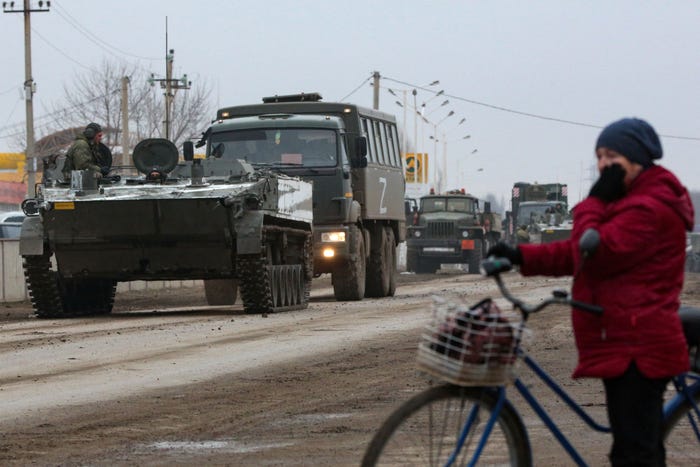
The general’s remarks provide a rare glimpse into the internal failures of the Russian military and align with Western analyses that highlight Russia’s severe underestimation of Ukrainian resistance. Chirkin noted that Moscow had “traditionally” miscalculated its military capabilities and the balance of power, leading to a disastrous invasion strategy that resulted in confusion and withdrawal from the Kyiv region by the end of March 2022.
Chirkin’s frankness during the interview surprised even Yuri Tamantsev, the RBC interviewer, who remarked on the unexpected honesty at the outset. “To be honest, I didn’t expect such frankness,” Tamantsev said, reflecting the unusual nature of such critique from a high-ranking military official.
Moreover, Chirkin indicated that Russian forces experienced a phenomenon he termed the “Tbilisi syndrome,” where troops hesitate to make tactical decisions without direct orders from superiors. This lack of initiative contributed to the poor execution of military strategies in the early stages of the conflict.
While Chirkin refrained from directly challenging the official justification for the invasion, his comments underscore the turmoil within the Russian military establishment. His insights come at a time when authorities have cracked down on dissent regarding the conflict, with laws that punish the dissemination of “false information” leading to severe penalties.
Chirkin’s military career was marred by controversy; he was ousted in 2013 on bribery charges and later convicted of accepting a bribe of 450,000 rubles, serving time in a labor camp before having his rank reinstated. Despite his past, his current critique of the military’s operational failures casts a long shadow over the Kremlin’s strategies.
As the war in Ukraine continues, the implications of Chirkin’s statements resonate deeply within the context of the ongoing conflict. The urgency of his message highlights not only the miscalculations that led to the current stalemate but also the need for a reevaluation of Russia’s military approach moving forward.
This latest development is crucial for understanding the evolving dynamics of the war, shedding light on the pressures faced by Russian leadership and the continued resistance of Ukrainian forces. As the situation unfolds, observers around the world will be watching closely for further revelations from within Russia’s military ranks.