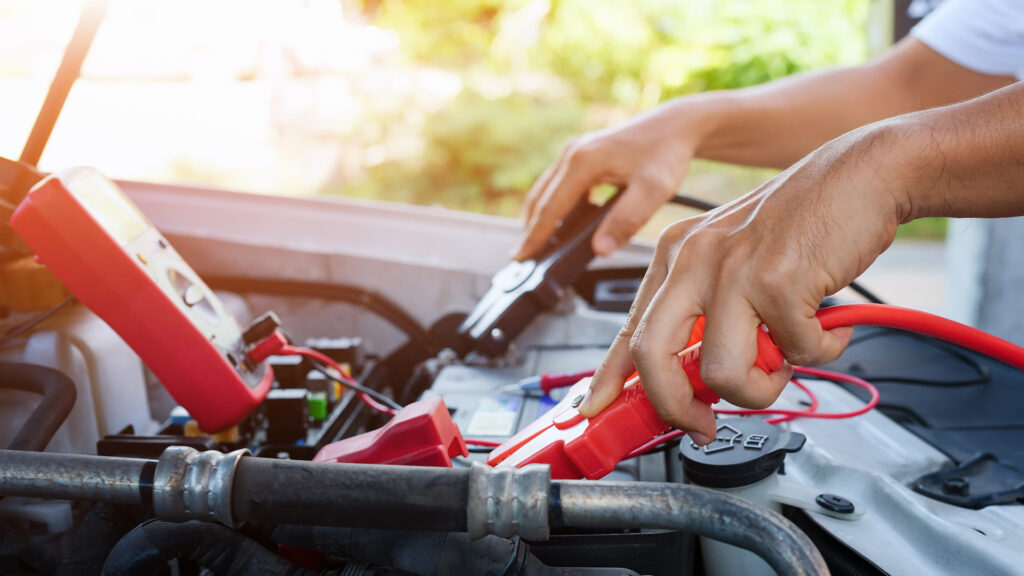
UPDATE: A renowned mechanic has unveiled an urgent guide to safely jump-starting a dead battery, emphasizing a crucial ten-minute rule to prevent future failures. Motorists are reminded that battery issues are common yet can be dangerous if not handled properly.
Darren Procacci, shop foreman and expert technician with The Long Motor Company for over 30 years, has shared an essential eight-step process that every driver should know. “Whenever someone asks me how to jump a vehicle safely, I emphasize the right tools and the right order because doing this wrong can cause serious damage or injury,” Procacci stated in an interview with The US Sun.
The first step in this urgent process is to secure a good set of jumper cables, gloves, and safety glasses if available. You will also need either a second vehicle, a fully charged battery, or a portable jump pack. Identifying the positive, or red, terminal on both the dead and donor batteries is crucial.
Next, Procacci advises finding a clean, unpainted metal surface away from the dead battery to serve as a grounding point. “Attaching the clamp to the negative terminal on the dead battery can cause an explosion,” he warns.
The process continues with the following steps:
1. Attach the red clamp to the dead battery’s positive terminal.
2. Connect the other red clamp to the good battery’s positive terminal.
3. Attach the black clamp to the negative post of the good battery.
4. Connect the other black clamp to the previously identified grounding point on the dead vehicle.
It’s critical to avoid letting the positive and negative clamps touch, as this can lead to sparks and potential injury. After connections are made, start the good vehicle and allow it to run for about five minutes. If the dead car does not crank, check the grounding connection and rev the running vehicle slightly to boost the alternator’s output.
Once the dead vehicle starts, follow these final steps to ensure a safe disconnection:
1. Remove the cables in the reverse order they were attached.
2. Let the jumped vehicle run for at least ten minutes to recharge the battery adequately.
Drivers can also start driving the revived vehicle to achieve the same charging effect.
This timely guidance from Procacci is essential for all drivers, ensuring that they are equipped to handle a dead battery situation safely and efficiently. Don’t forget to share this vital information with friends and family to keep everyone safe on the road!