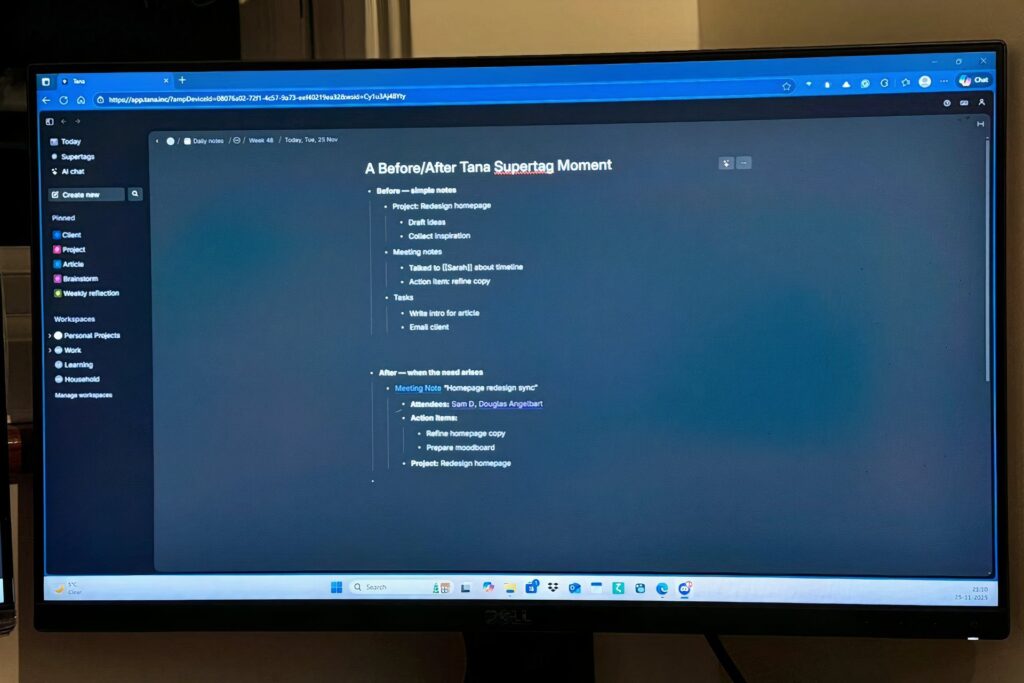
UPDATE: New insights into the AI-powered productivity app Tana reveal a simplified organizational method that is gaining popularity among users. This urgent development highlights how productivity can be achieved without the overwhelming complexity typically associated with Tana’s advanced features like Supertags.
In recent reports, many users have expressed frustration with Tana’s intricate setup and extensive functionalities. They often abandon the app after struggling with tutorials and complex systems. However, a new approach focuses on using Tana as a straightforward outliner, allowing users to manage their lives effectively without feeling overwhelmed.
This shift towards simplicity emphasizes capturing information quickly through basic organizational features. Users can create daily pages—automatically generated by Tana—serving as a catch-all for thoughts, meeting notes, and ideas, which can be organized later. The absence of immediate categorization alleviates decision fatigue, allowing users to focus on what matters right now.
Notably, Tana’s infinite nesting feature enables users to create hierarchies of information easily. For instance, a single bullet point can expand into detailed sub-bullets for tasks and notes, creating a clean workspace without the need for upfront definitions. The drag-and-drop interface for managing projects makes reorganization feel seamless rather than burdensome.
Another significant advantage of this approach is the use of backlinks. This feature allows users to automatically connect related notes and pages by simply referencing another node. For example, typing [[Project Name]] links all mentions of that project, creating a comprehensive resource without manual effort. This functionality is particularly beneficial for keeping track of recurring topics and conversations.
Additionally, Tana’s search capabilities are lauded as exceptional, enabling users to find relevant information across their workspace without relying on traditional folders or categories. Instant search results, along with context around each entry, streamline the retrieval process and reduce organizational anxiety.
However, experts caution that this simplified method may not suit everyone. For users managing complex projects with multiple stakeholders, the lack of advanced features may become a limitation. As Tana continues to evolve, users are encouraged to adopt advanced functionalities like Supertags only when necessary, creating a system that aligns with their specific needs.
The pressing question is: can Tana’s newfound simplicity sustain user interest and foster productivity in the long term? As community feedback continues to pour in, it seems that embracing a less complicated approach could be the key to unlocking Tana’s potential.
For those eager to enhance their productivity without the stress of complex systems, trying Tana’s basic features offers a promising solution. Users are encouraged to share their experiences as this method gains traction, potentially reshaping how productivity apps are utilized globally.
Stay tuned for more developments on Tana as it continues to redefine productivity and user engagement.