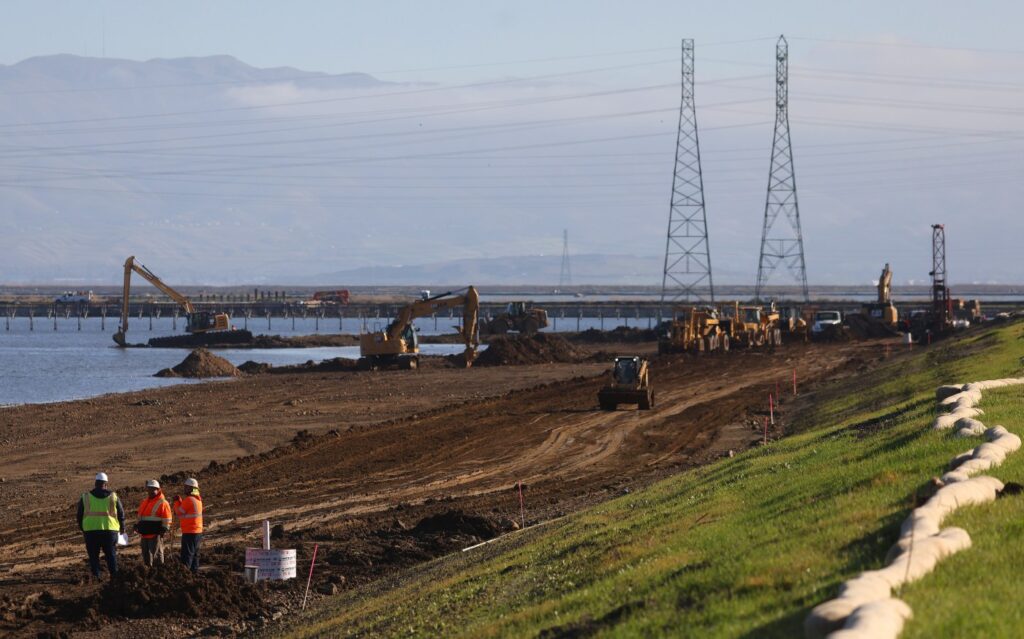
UPDATE: A transformative $20 million wetland restoration project in Mountain View is nearing completion, with crews putting the final touches on a development that promises to revitalize the San Francisco Bay ecosystem. The ambitious initiative, which spans 435 acres, aims to restore former industrial salt ponds into thriving tidal marshes and enhance public access with new hiking trails.
Scheduled for completion by the end of December 2023, this project is part of a larger effort to convert 15,100 acres of salt ponds around the South Bay into natural habitats for various wildlife, including ducks, shorebirds, and even leopard sharks. This restoration is a significant milestone in the ongoing campaign led by state and federal agencies alongside environmental groups to restore the bay’s ecological balance.
Why This Matters: As climate change exacerbates flooding risks and habitat loss, this restoration is critical for both wildlife and local communities. “Marshes clean the water and absorb wave energy to reduce flooding and sea level rise,” explained Dave Halsing, executive project manager of the South Bay Salt Pond Restoration Project. “We are putting things back to the way they were as much as we can.”
The project site, known as Pond A2W, is located near the Shoreline Amphitheater and just north of Google’s headquarters. The area was historically used for salt production, creating a large pond that is now being transformed into a vital natural resource. Since the acquisition of the land from Cargill Salt in 2003 for $100 million, significant efforts have been made to restore the bay’s natural conditions, which were severely compromised over the past century.
Construction Highlights: Over the past three years, crews have moved an astonishing 180,000 cubic yards of dirt, enough to fill 18,000 dump trucks, to create bird islands and strengthen levees. Floating conveyer belts have been employed to facilitate the construction of five islands, which will offer nesting sites for birds. Additionally, the project will introduce two new 100-foot-long bridges as part of a new 1.2-mile public trail for hiking and biking, set to open early next year.
As part of the restoration process, crews plan to breach the pond’s levees in four locations, each approximately 100 feet wide, allowing tidal action to flow into the pond for the first time in nearly a century. This tidal influx is expected to foster the growth of marsh plants and enrich the habitat for local wildlife. “Within a few years, the pond will become shallower, and vegetation will begin to thrive,” Halsing noted.
Despite concerns about potential flooding from nearby cities, the project has garnered support from various stakeholders, including the city of Mountain View, which has invested in flood protection measures. The project is backed by funding from state and federal sources, as well as local initiatives like Measure AA, a parcel tax approved by 70% of voters in the Bay Area to support wetland restoration.
As the project nears its conclusion, the environmental community is optimistic. “Progress has been excellent,” said David Lewis, executive director of Save the Bay. “We’ve brought back a huge amount of habitat in the past quarter century, making the bay healthier and protecting the shoreline better.”
With the restoration of Pond A2W, the Mountain View project stands as a beacon of hope in the fight against ecological degradation. As the bay’s natural beauty is restored, local residents and wildlife alike will benefit from the revitalized habitat, ensuring a healthier ecosystem for generations to come.
Stay tuned for more updates as the project wraps up and the new trails become accessible to the public early next year.