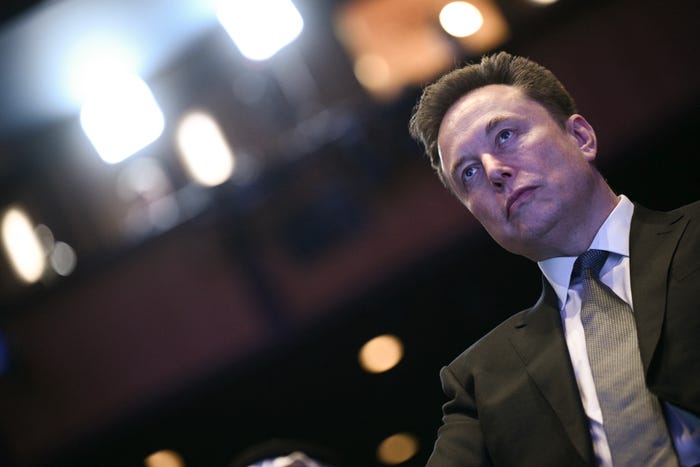
UPDATE: Elon Musk claims that artificial intelligence (AI) is the sole solution to the United States’ escalating debt crisis, predicting a turnaround within three years. In a recent conversation with investor Nikhil Kamath, Musk stated that advancements in AI and robotics will propel productivity, allowing goods and services to outpace inflation.
The national debt has reached a staggering $38.34 trillion as of November 26, more than double its value from a decade ago, according to data from the US Treasury. Musk emphasized that AI-driven productivity could lead to significant deflation, making it the only viable escape route from America’s fiscal challenges.
“In three years or less, my guess is goods and services output will exceed the rate of inflation,” Musk said, highlighting his belief in the transformative power of technology. He envisions a future where human labor is optional, potentially leading to a scenario Musk calls “universal high income,” where basic needs are met without the necessity of work.
Earlier this month, Musk reiterated his vision at a Tesla shareholder event, claiming that his Optimus robot could eliminate poverty and reduce the need for human labor. “There’s actually only one way to do that, and that’s with the Optimus robot,” he stated.
Musk’s predictions come as tech leaders like Google CEO Sundar Pichai warn of the dual-edged nature of AI. Pichai noted that while AI could yield “extraordinary benefits,” it may also cause “societal disruptions,” requiring a national dialogue about the impact on jobs and the economy.
Investor Vinod Khosla supports Musk’s claims, forecasting that AI could eventually perform 80% of the work in 80% of jobs, thereby granting people more free time. However, Khosla cautioned that to mitigate rising inequality, governments may need to implement a universal basic income.
Despite the optimistic outlook from Musk and other tech leaders, not everyone shares this view. Geoffrey Hinton, known as the “godfather of AI,” warned that while AI could generate immense wealth, the benefits may concentrate among a select few. “It will make a few people much richer and most people poorer,” Hinton stated, cautioning against potential job losses due to AI advancements.
As the conversation around AI’s role in the economy intensifies, Musk’s assertions bring urgency to the debate on how technology can reshape financial futures. With the national debt reaching critical levels, the stakes are high and the timeline is short.
The coming years will be crucial as advancements in AI and robotics unfold. Observers are keenly watching to see if Musk’s predictions will materialize and if AI can indeed offer a way out of the US debt crisis.
Stay tuned for updates as this story develops.