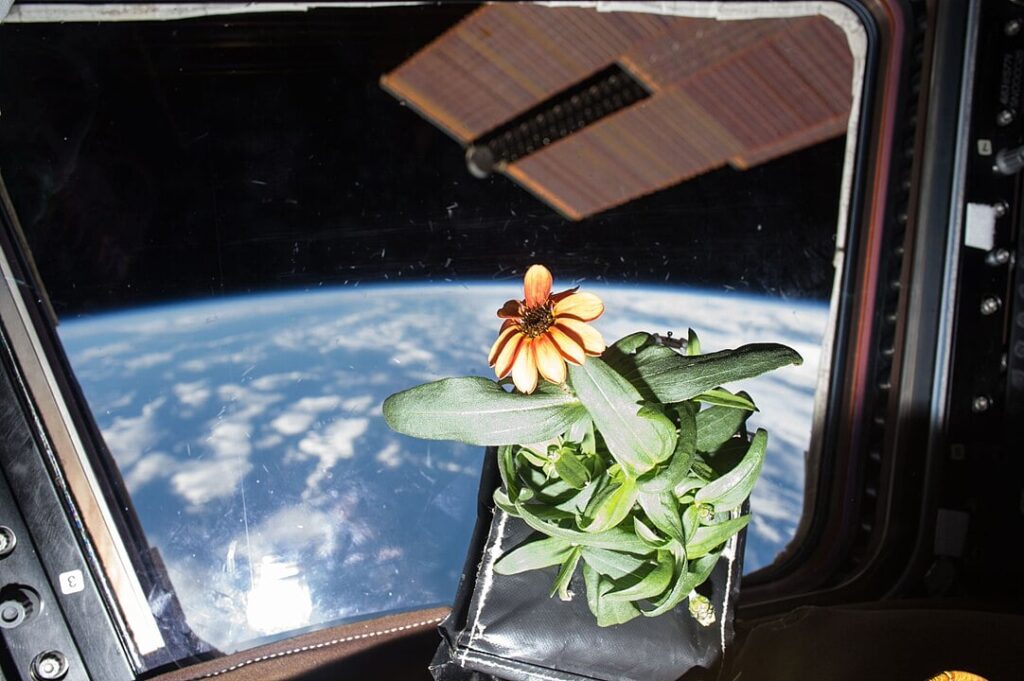
NASA is actively pursuing the development of agricultural technologies to support human missions to the Moon and Mars. This initiative aims to create sustainable food sources in space, addressing a critical need for astronaut nutrition during long-duration missions. With plans for the Artemis III mission in 2027, NASA is collaborating with scientists globally to transform science fiction into reality.
Astronaut nutrition has been classified as a top priority risk by NASA, reflecting its significance for crew health and mission success. While freeze-dried meals suffice for short trips to the International Space Station (ISS), these provisions are inadequate for the lengthy journeys to Mars, which could last years. To tackle this challenge, scientists are focusing on developing Bioregenerative Life Support Systems that can grow fresh food in space.
Plants: More Than Just Food in Space
The role of plants in space extends beyond providing nutrition. They play an essential part in generating oxygen through photosynthesis, purifying water, recycling waste, and even contributing to the production of pharmaceuticals and construction materials. Additionally, the presence of greenery can positively impact the psychological wellbeing of astronauts, offering a connection to nature during isolating missions far from home.
Growing plants in space presents unique challenges due to altered gravitational conditions. On Earth, gravity directs root growth downward while shoots grow upward. This process, known as gravitropism, is disrupted on the Moon, which has only one-sixth of Earth’s gravity, and Mars, which has about one-third. Spacecraft experience microgravity, complicating fluid dynamics and nutrient delivery to plant roots, thereby affecting growth.
Innovative Research and Future Experiments
Researchers from the University of Melbourne are leading efforts to evaluate various plant species for their viability in space habitats. Their framework assesses not only crop yield but also how effectively plants perform crucial life support functions, such as air recycling and water purification, under extraterrestrial conditions.
A landmark experiment, the Lunar Effects on Agricultural Flora, will take place during the Artemis III mission. This experiment involves growing three fast-growing plant species in a controlled environment on the lunar surface. After one week, approximately 500 grams of plant samples will be returned to Earth for analysis, allowing scientists to study the effects of reduced gravity and increased radiation on gene expression and plant physiology.
To facilitate these advancements, researchers are developing sophisticated computer models that utilize artificial intelligence. These models aim to optimize plant growth while also considering the sensory perceptions and food preferences of astronauts. This approach is designed to prevent menu fatigue during extended missions, ensuring that astronauts receive a varied and appealing diet.
As NASA and its partners continue to push the boundaries of space agriculture, the vision of astronauts enjoying fresh lettuce grown on lunar soil is becoming increasingly feasible. Through innovative research and international collaboration, the dream of sustainable food production in space is on the verge of becoming a reality.