Scientists have discovered the first evidence of materials from the early Earth, known as the proto-Earth, dating back approximately 4.5 billion years. This groundbreaking research, led by Nicole Nie, an Assistant Professor of Earth and Planetary Sciences at MIT, provides new insights into Earth’s formation and its early chemical composition. The study, published in the journal Nature Geoscience, highlights how ancient rocks from locations such as Greenland and Canada offer crucial isotopic evidence about the planet’s formative years.
The investigation centers on isotopic ratios, particularly of potassium-40 (40K), in ancient rock samples. By comparing these ratios with modern terrestrial samples and meteorites, researchers sought to understand the characteristics of the proto-Earth before the cataclysmic impact that created the Moon. The study is titled “Potassium-40 isotopic evidence for an extant pre-giant-impact component of Earth’s mantle.”
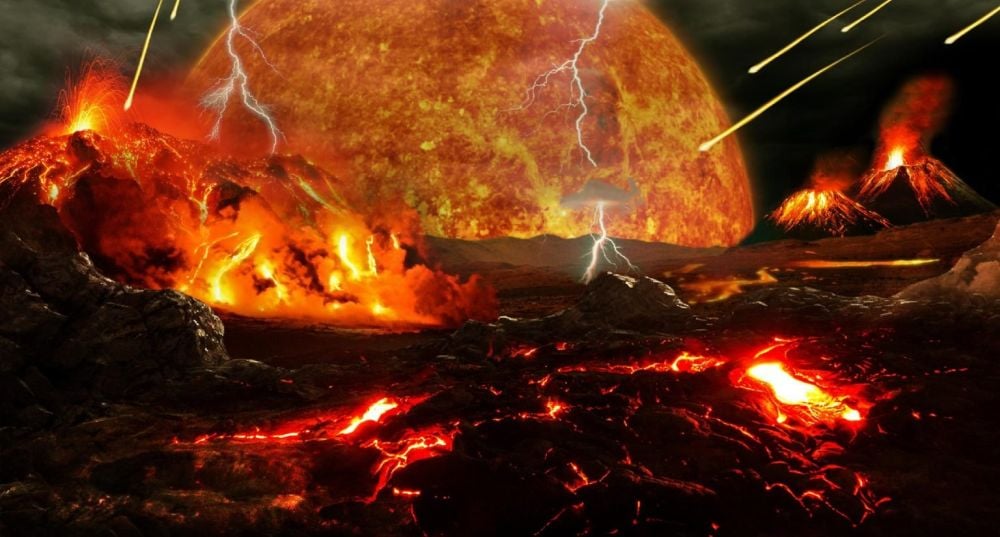
During Earth’s formation, a protoplanet named Theia collided with the young planet, resulting in the creation of the Moon and altering Earth’s chemistry. The remnants of this early Earth, now encapsulated in ancient rocks, are essential for understanding the planet’s history. The researchers’ work began in 2023, analyzing meteorites from around the world to document the changes in the Solar System during its infancy.
In their analysis, Nie and her team identified that Earth’s potassium isotopic makeup differs from that of the meteorites. Earth’s potassium is predominantly made up of potassium-39 (93.26%) and potassium-41 (6.73%), with only trace amounts of potassium-40 (0.0117%). In contrast, the meteorites exhibited a different isotopic ratio, suggesting that some of the materials that formed Earth had unique isotopic signatures distinct from those present after the Moon-forming impact.
Insights from Ancient Rock Samples
The research team examined some of the oldest rocks on Earth, including those from Greenland, Canada, and lava samples from Hawaiian volcanoes. They aimed to find potassium isotope signatures that could provide evidence of the proto-Earth. Their laboratory analysis revealed that the ancient samples showed significant deficits of potassium-40, specifically a reduction of 65 parts per million. This finding indicates that these materials have a distinct geological history compared to the majority of Earth’s rocks, which have undergone extensive changes due to impacts over billions of years.
The researchers hypothesized that the samples with lower potassium-40 concentrations were remnants of the proto-Earth, preserved despite the many geological changes the planet has experienced. To validate their theory, the team gathered compositional data on various meteorites and simulated how impacts would have altered potassium-40 concentrations over time. Their simulations corroborated the idea that ancient rocks likely contain signatures from the proto-Earth, while modern samples reflect the cumulative effects of numerous impacts.
Nie remarked, “This is maybe the first direct evidence that we’ve preserved proto-Earth materials. We see a piece of the very ancient Earth, even before the giant impact. This is amazing because we would expect this very early signature to be slowly erased through Earth’s evolution.”
Uncovering Earth’s Origins
Despite this significant finding, the isotopic signature of the proto-Earth samples does not precisely match any known meteorites. This discrepancy suggests that the original materials from which Earth formed remain unidentified. The ongoing research indicates that scientists have much to learn about Earth’s original chemical composition, highlighting that the current meteorite inventory does not fully represent the building blocks of our planet.
Nie emphasized the importance of their findings for understanding Earth’s origins: “Scientists have been trying to understand Earth’s original chemical composition by combining the compositions of different groups of meteorites. But our study shows that the current meteorite inventory is not complete.”
This research not only sheds light on the conditions of early Earth but also adds complexity to our understanding of planetary formation and evolution. As scientists continue to explore ancient materials, they hope to uncover more about the enigmatic past of our planet, providing vital context for the processes that shaped the Earth as we know it today.